

Your cat can cough up a hairball and be perfectly fine. Your job is to notice when it stops being “ugh, floor cleanup” and becomes “call the vet.”
What the risk is and why now
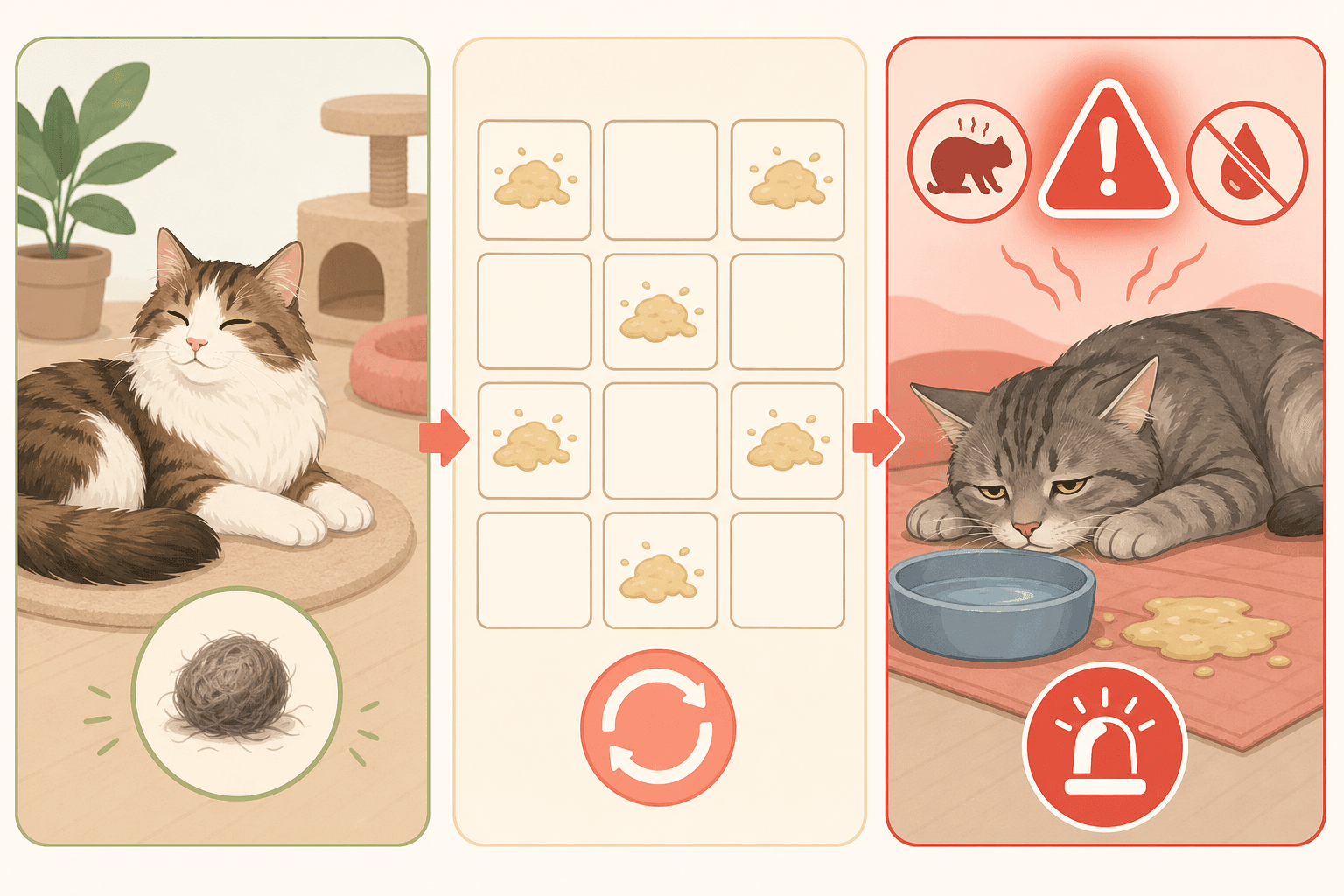
Cat vomiting is not one tidy problem. The occasional hairball happens. Repeated vomiting is different, especially when it comes with appetite changes, weight loss, lethargy, diarrhoea, or blood. That pattern can point to gastrointestinal disease, metabolic disease, toxin exposure, infection, or an obstruction.
This guide is for cat owners in Singapore, Malaysia, and Indonesia, especially indoor cats in apartments. In warm, humid homes, a vomiting cat can lose fluid while spending the day in an enclosed high-rise flat without active cooling. Hydration is part of the story from the start.
Hair may be involved, but it is not the whole explanation. Cats swallow hair when they groom. Frequent hairballs can also point to excessive grooming, skin disease, parasites, gastrointestinal motility problems, or another illness that needs checking.
In Singapore, the practical bar has shifted too. Pet-cat licensing began on 1 September 2024, and responsible containment plus prompt care are now part of the local expectation for owned cats. Use this guide to prepare for the vet conversation, not to diagnose your cat at home.
The signs to watch for
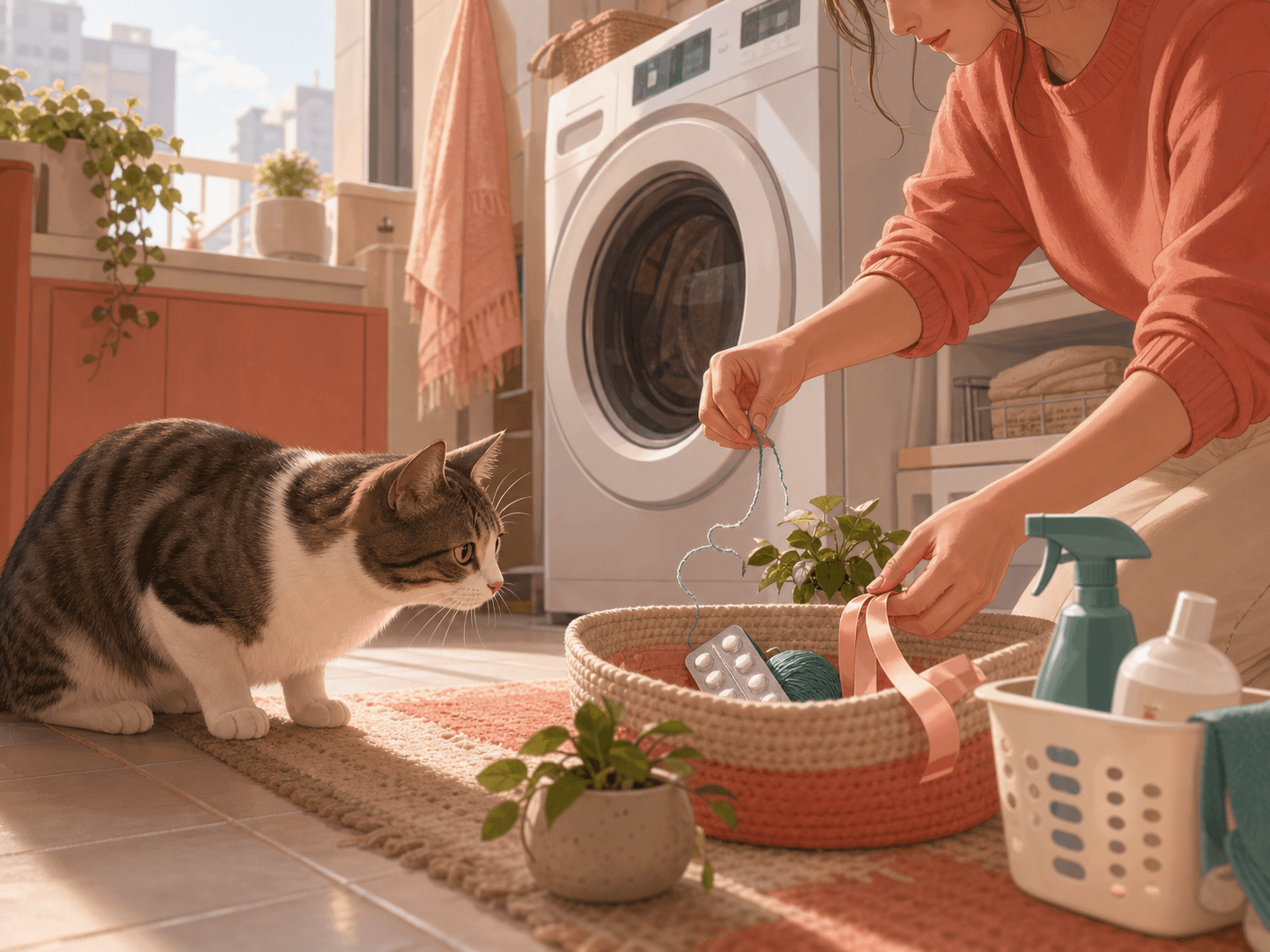
Treat vomiting as a pattern, not one puddle. Track when it happens, how often it happens, and what comes up. Note whether it looks like hair, food, liquid, bile, blood, or something you cannot identify.
| Check | What to record |
|---|---|
| Vomit pattern | Frequency, timing after meals, and appearance |
| Eating and drinking | Appetite, water intake, treats, supplements, table food, and recent diet changes |
| Litter tray | Stool changes, constipation, urine changes, or reduced urine |
| Body and mood | Weight trend, hiding, lethargy, weakness, or pain |
Photos help. So does a boring diary. A vet can use those details to separate a hairball, regurgitated food, food-related vomiting, and signs of wider illness.
Keep an eye on body weight. Weight loss can be an early sign that a cat is unwell. Dehydration signs matter too: tacky gums, sunken eyes, weakness, reduced urine, or poor skin elasticity can suggest fluid loss. Skin tenting is less reliable in older or thin cats, so do not rely on that alone.
Do not “fast it out” for long periods without veterinary direction. Cats can become seriously ill when they stop eating.
When to see a vet
Call your vet the same day if vomiting repeats, or if your cat brings up blood or material that looks like coffee grounds. Call promptly for severe lethargy, collapse, pain, a bloated abdomen, suspected toxin exposure, suspected foreign-body ingestion, dehydration signs, or vomiting in a kitten, senior cat, or cat with chronic disease.
| What you see | What to do |
|---|---|
| Repeated vomiting | Call the vet the same day |
| Blood or coffee-ground-like vomit | Call the vet now |
| Collapse, severe lethargy, pain, or bloated abdomen | Treat it as urgent |
| Suspected lily or human-medication exposure | Contact a vet or poison service |
| Possible string, rubber band, toy, bone, or plant-material exposure | Tell the vet before the visit |
Bring the boring details. They are useful. Note the number of vomiting episodes, the first and latest episode time, photos of the vomit, food and medication lists, possible lily or human-medication exposure, possible string exposure, stool and urine changes, appetite, water intake, and any weight trend.
A vomiting cat is not being dramatic for content. She is giving you data.
Tonight, start a simple vomiting note on your phone: time, appearance, food, water, stool, behaviour, and one photo if it happens again. That record can make the vet visit faster and clearer.
— Manja