
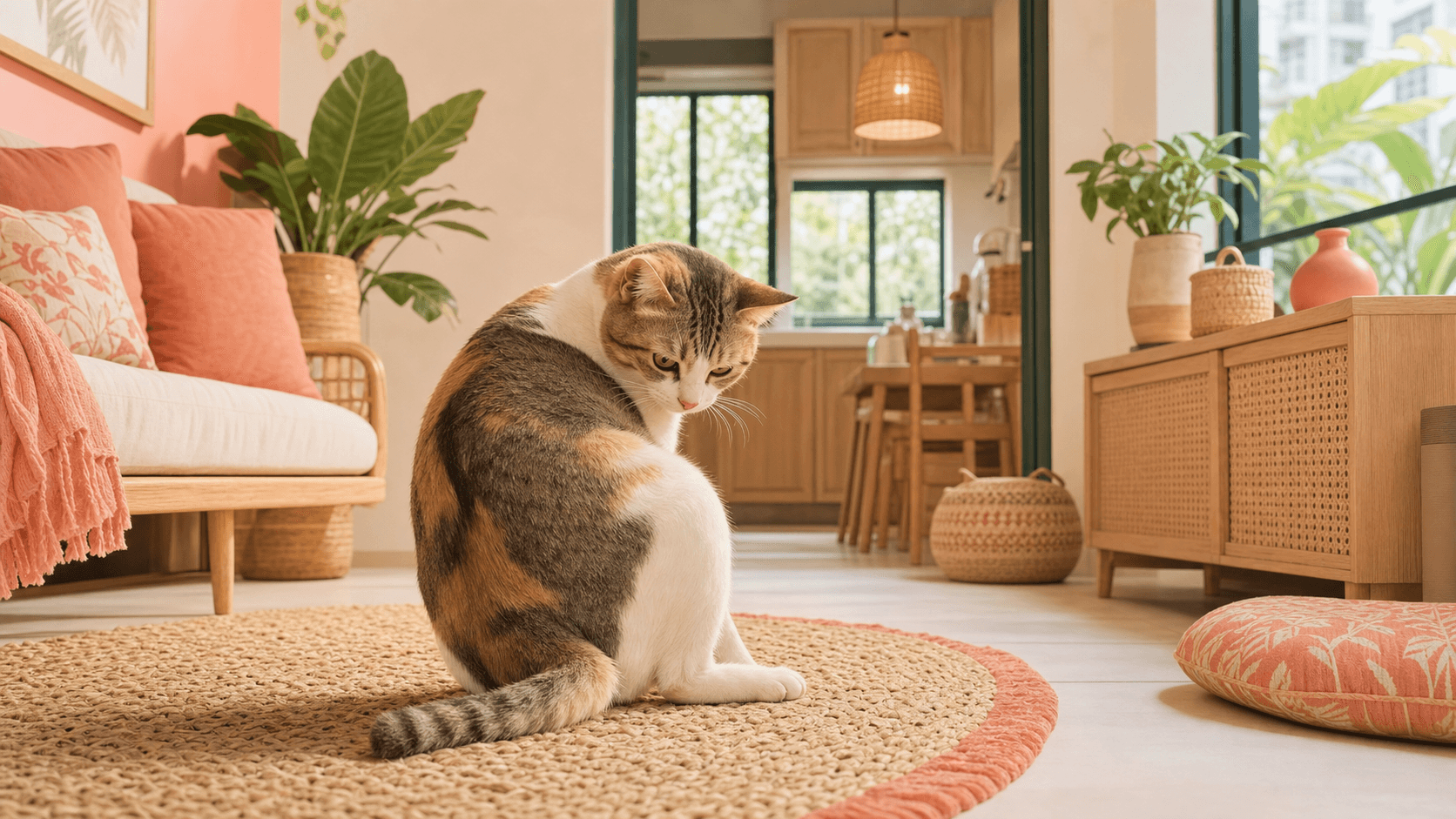
A cat can make a medical symptom look like bad manners in under three seconds. Bottom-dragging across the rug, frantic licking after using the litter tray, or biting near the tail base is not something to scold away. It is a clue.
For cats in Singapore, Malaysia, and Indonesia, especially indoor cats sharing sofas, beds, corridors, and small apartment routines, the useful response is simple: note the pattern, check the litter tray, and call the vet if it repeats or looks painful. Use this guide to prepare for that conversation, not to diagnose your cat at home.
First, separate grooming from a symptom

One quick lick after toileting can be ordinary cat admin. Repeated licking around the anus, scooting, chewing near the tail base, vocalising while passing stool, or suddenly refusing touch near the back end is different.
Cats also hide discomfort. A bottom problem may arrive with quieter signs: hiding under the bed, eating less, grooming less or overgrooming, swatting when lifted, avoiding jumps, or paying repeated attention to one painful spot.
The possible causes are not all the same. Scooting or licking can come from anal-sac disease, parasites, diarrhoea, constipation, skin irritation, flea allergy, wounds, or masses. Treat the behaviour as a sign to investigate, not as a personality flaw. Though, yes, the timing will probably be when guests are over.
Check the litter tray before checking the cat

Start with the tray because stool changes often explain back-end irritation. Look for diarrhoea, mucus, blood, constipation, straining, unusually hard stool, or faeces stuck in the fur. In multi-cat apartments, this can be annoyingly unclear, so note which cat entered the tray if you happen to see it.
Then look at your cat from a respectful distance. Do not poke, squeeze, or “express” anything at home unless your veterinarian has examined the cat and shown you what to do.
Things worth writing down:
- when the scooting or licking happened
- what the stool looked like
- whether appetite, grooming, mood, or jumping changed
- whether there is a strong fishy smell
- whether the area beside the anus looks swollen, wet, bloody, or painful
- whether your cat avoids tail or back-end touch
A short video helps, if you can take one without chasing your cat around the flat.
What anal sacs have to do with this
Cats have anal sacs beside the anus. When they become impacted, inflamed, infected, abscessed, or ruptured, a cat may lick, scoot, smell suddenly foul, or react sharply when the tail area is touched.
Swelling beside the anus, pus, blood, a painful lump, sudden tail-touch avoidance, or a strong fishy odour can fit anal-sac impaction, infection, rupture, or abscess. That is clinic territory.
Do not try to express a cat’s anal sacs unless your veterinarian has examined the cat and shown you exactly what to do. The wrong pressure on a painful or infected area can make things worse, and scooting may not be an anal-sac problem at all.
Parasites and skin irritation still matter indoors
Indoor cats are not sealed museum exhibits. Fleas can persist indoors, and warm, humid homes in the region make parasite prevention a practical topic even for cats who mostly inspect the world from a window grille.
Check bedding, favourite nap spots, and the fur around the tail base, thighs, belly, and perineum. Rice-like pieces near the anus, in faeces, or where your cat sleeps can point toward tapeworms. Fleas, flea dirt, crusts, redness, hair loss, or moist self-trauma may suggest flea-related itch or skin disease.
Do not start random dewormers, flea products, creams, or human ointments without checking with your vet. Cat-safe dosing and product choice matter, especially in homes with more than one pet.
Call the vet when the pattern stops being minor
Call a vet promptly if the scooting or licking repeats, looks painful, or comes with swelling, bleeding, pus, a bad odour, diarrhoea, constipation, appetite change, lethargy, vomiting, weight loss, or trouble passing urine or faeces. That is the point where home observation has done its job.
Before the appointment, make a small evidence pack: a video if you have one, notes on stool changes, diet or treat changes, parasite-prevention history, and when the signs started. Bring a fresh stool sample if the clinic asks for one.
One useful next step: tonight, check the tray and your cat’s usual sleeping spot. If you see rice-like segments, blood, pus, swelling, repeated scooting, or any change in appetite or energy, book the vet visit instead of waiting for the next weird floor performance.
— Manja