
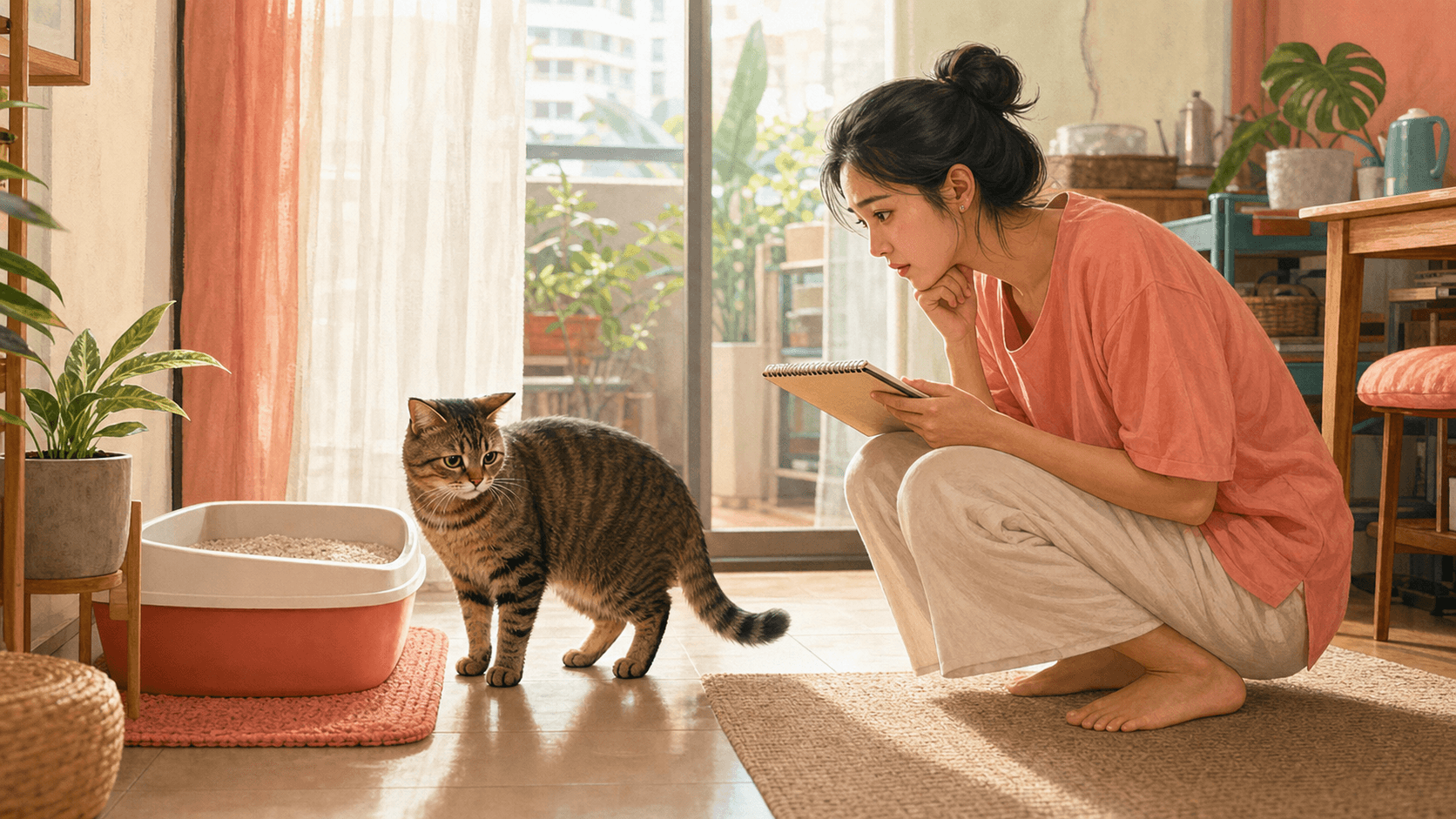
The wet patch on the bed feels personal. It usually is not.
A cat peeing outside the litter box is giving you information: pain, urinary disease, stress, urine marking, a box they dislike, or a home routine that has shifted. The useful first move is not to decide your cat is angry. It is to work out whether this is urgent, then make the litter setup easier to use while you book the right level of vet care.
Manja is editorial, so use this to prepare for the vet conversation, not to diagnose your cat at home.
First, rule out the dangerous pattern
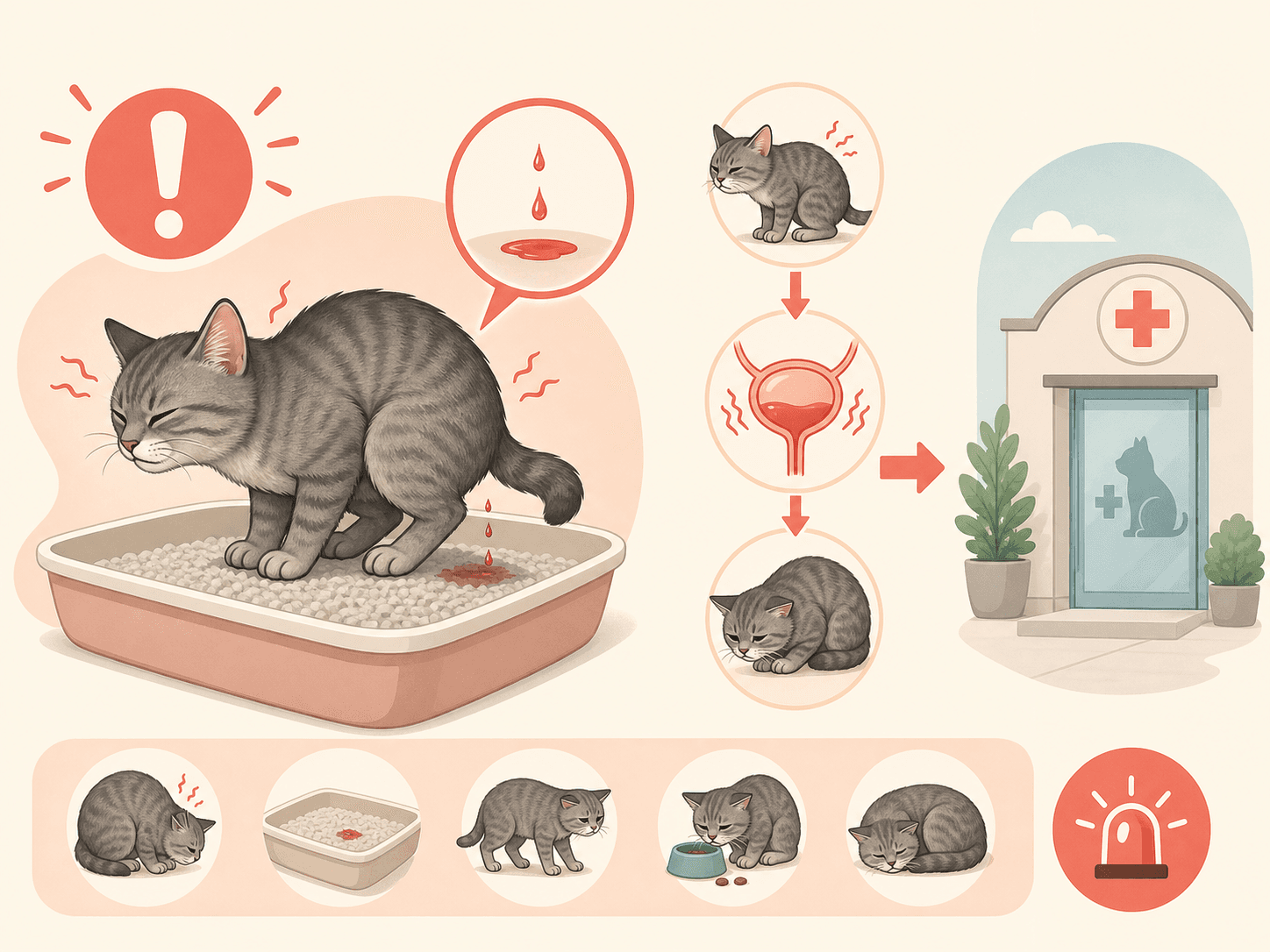
Take urinary changes seriously, especially in male cats. Repeated box visits, straining, little or no urine, crying, vomiting, or lethargy means you should contact a vet urgently. Urethral obstruction can be life-threatening, especially in male cats.
Blood in urine or painful urination is also not a wait-and-see problem. Call your vet promptly.
If this is a first-time litter-box change in an adult or senior cat, or accidents keep happening after the first clean-up, book a vet check and bring notes. The same goes for urinary signs with reduced appetite, hiding, feverishness, or a known kidney or diabetes history.
Read the puddle without turning it into a personality test
Where and how the urine appears can help your vet and behaviour team narrow the possibilities. Small spots on a wall, sofa side, curtain, or other vertical surface may fit urine marking, though health still needs review. Larger puddles on the floor, bed, laundry pile, bath mat, or rug may look more like a toileting accident, but that still does not prove the box is the only issue.
Watch for the details around the event: more trips to the box, tiny clumps, straining, crying while urinating, blood, licking the genital area, hiding, appetite change, weight change, lower activity, or a grooming change. A cat with urinary discomfort may still eat dinner and look mostly normal between episodes, so do not rely on one calm moment as proof that everything is fine.
Make the bathroom less annoying
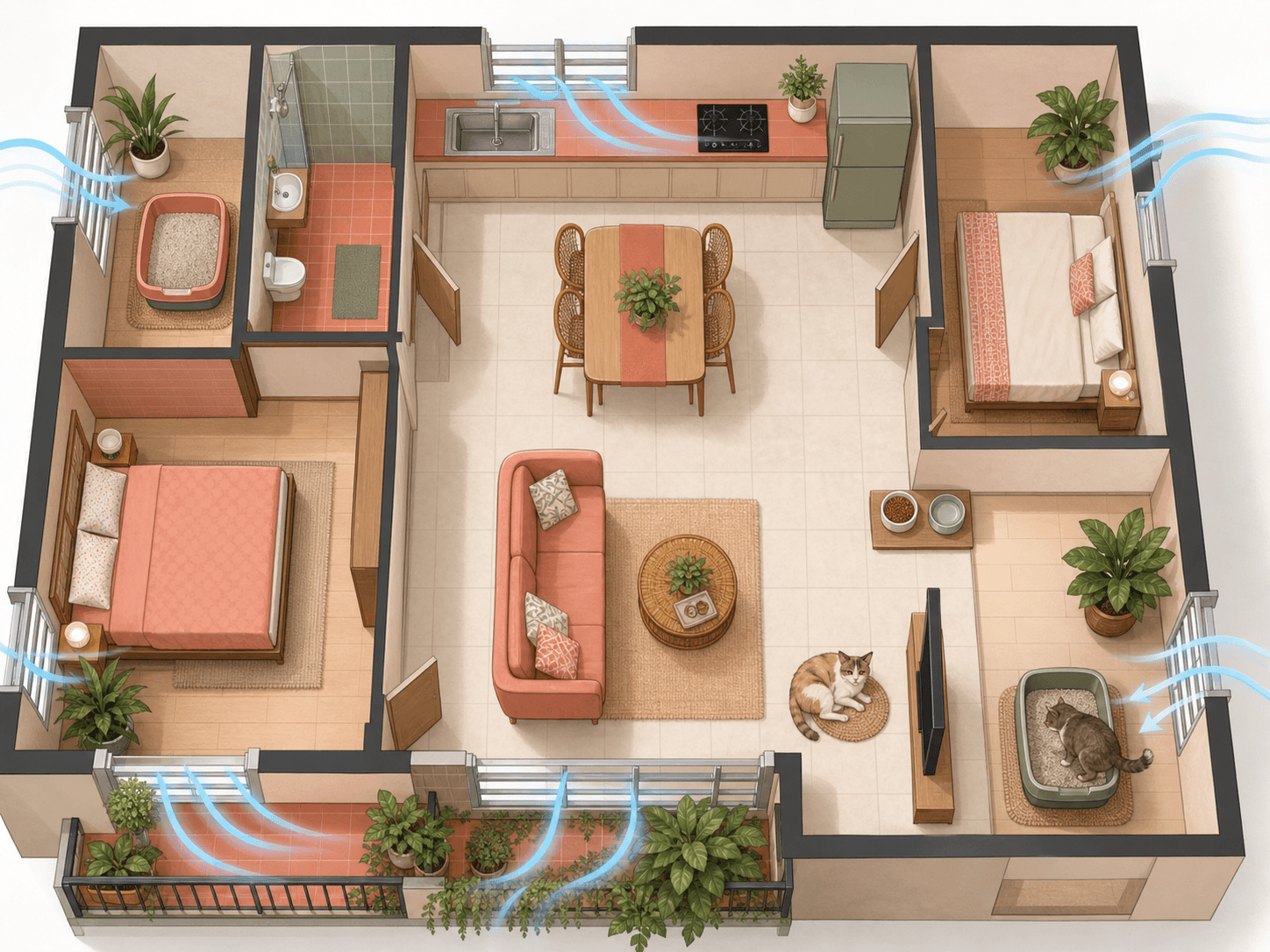
Apartment cats in Singapore, Malaysia, and Indonesia often share tight space with people, laundry racks, air-con schedules, visiting relatives, renovation noise, and other pets. A litter box beside the washing machine, in a narrow service yard, or behind a door that sometimes gets shut can become a problem before anyone notices.
Aim for one litter box per cat, plus one extra, placed in separate accessible locations. In multi-cat apartments, one cat may block a corridor, stare from the doorway, or quietly claim a favourite box. Owners often see only the puddle, not the social pressure that happened five minutes earlier.
Warm, humid homes make odour and damp litter harder to ignore. Scoop often, keep the area well aired, and be careful with strong-smelling cleaners or sudden litter changes. Cats are not looking for a spa bathroom. They usually want a clean, predictable, low-drama place where no one corners them.
For HDB and condo households, also check the boring access problems: a box moved for mopping, a balcony or service-yard door left closed, a covered box that traps smell, a new robot vacuum route, a visiting pet, or construction noise near the usual toileting spot. Small disruptions feel bigger when a cat's whole territory is indoors.
Keep a short urine-event note
Do not try to remember everything at the clinic counter. For the next few days, record the time, urine amount, location, surface, posture, vocalisation, visible blood, litter type, box cleaning, new pets or people, renovation or noise, and any diet or water changes.
Photos help too. Take one clear photo of the litter area and one of the accident site before deep cleaning, if you can do that without delaying care. Bring the names of the litter, cleaner, food, treats, medication, and supplements your cat is currently using.
If you are cleaning the spot, use a pet-safe enzymatic cleaner where appropriate and avoid punishment. Scolding, spraying water, or pushing the cat into the box adds stress and does not tell you whether the original problem was pain, fear, access, or conflict.
What to bring to the appointment
Bring the urine-event note, photos of the litter setup and accident spots, and a plain description of what changed at home. Mention new cats, foster or adoption-trial cats, rescue handover stress, visitors, travel, boarding, renovation, changed work hours, new food, new litter, or a moved box.
The best vet conversation starts with a timeline: when it began, how often it happens, whether your cat is passing normal amounts of urine, and whether appetite, weight, thirst, grooming, or behaviour changed at the same time. That gives your vet more to work with than, "I think my cat is angry."
Before bed, make the urgent/non-urgent call first. If there is straining, little or no urine, crying, vomiting, or lethargy, contact a vet urgently. If not, start the note, photograph the setup, and book the check instead of waiting for the next puddle to explain itself.
— Manja