
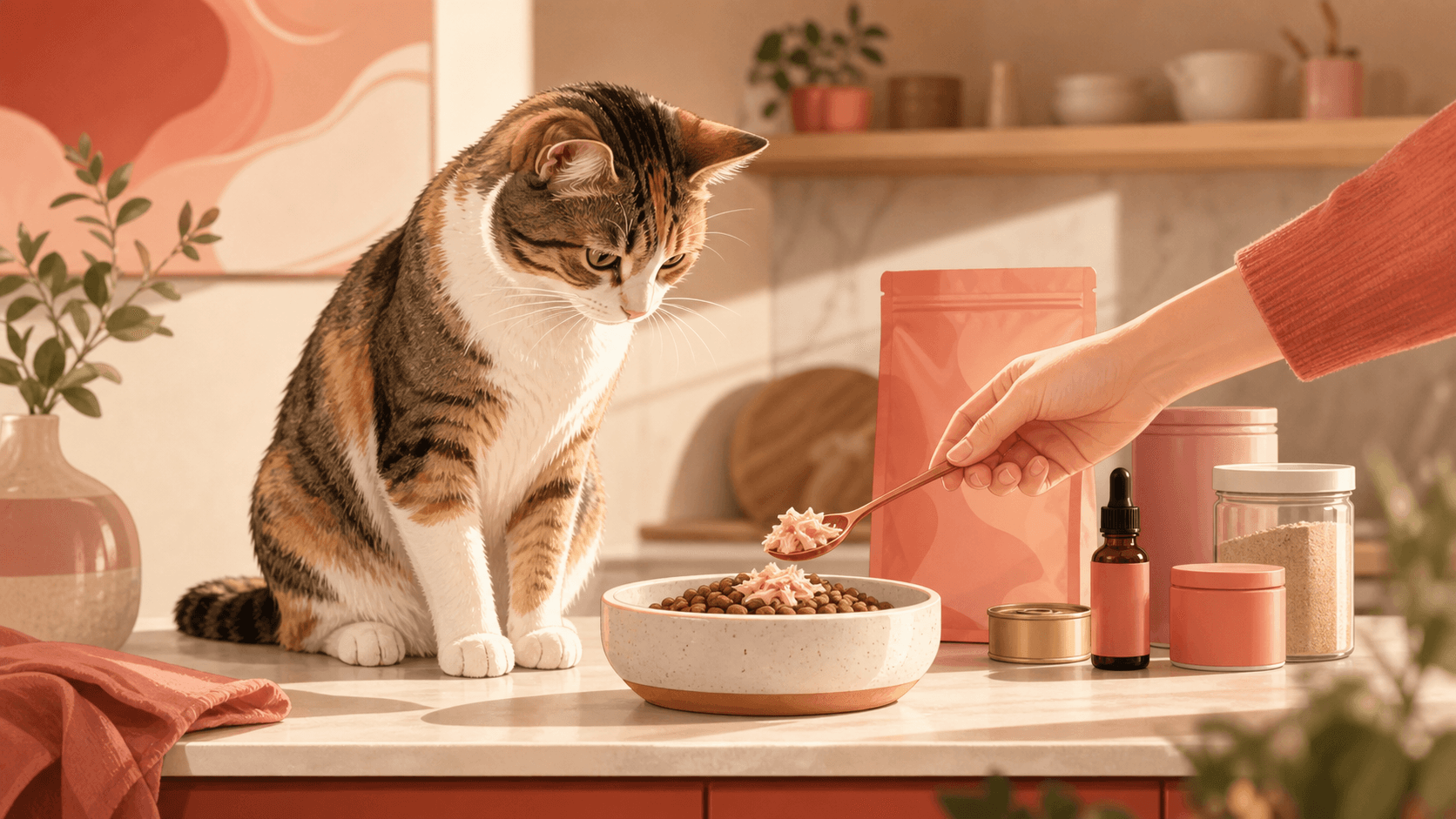
A topper can help a cat eat tonight, but it should not quietly become the diet.
Use this guide to make a calmer call at the food bowl. A spoon of broth, flakes, oil, probiotic powder, or supplement may look small. It still counts as food intake, and sometimes as a medical decision. Manja is editorial, not a clinic, so use this to prepare for the vet conversation, not to diagnose your cat at home.
Toppers are add-ons, not meals

Start with the boring question: is the main food complete and balanced for your cat’s life stage?
That matters more than the prettiest ingredient list. WSAVA’s food selection guidance puts nutritional adequacy near the centre of choosing a pet food, because the whole diet is what feeds the animal, not one attractive ingredient on the packet (Selecting the Best Food for your Pet). Tufts veterinary nutritionists make the same practical point: do not judge a food only by marketing claims or ingredient names (Questions You Should Be Asking About Your Pet's Food).
A topper can be useful when your cat needs a little encouragement. A complete meal plus a small, safe add-on is different from a bowl that slowly becomes half extras. The second version can dilute the complete diet or add calories you did not plan for.
| Bowl habit | Why it matters |
|---|---|
| Complete cat food as the base | Designed to meet nutritional needs for the stated life stage |
| Broth or flakes as a small add-on | May improve smell, moisture, or interest |
| Several extras layered daily | Can add calories, duplicate nutrients, or unbalance the diet |
| Topper replacing proper food | Risks turning a balanced meal into a guessing game |
The daily pattern matters. One Saturday spoon is not the same as three products on every meal.
Count the extras before your cat’s waistline does
Cats do not know that “a bit only” still has calories.
AAHA’s nutrition and weight management guidance says a nutrition assessment should include the pet’s full intake, including treats, table food, supplements, and foods used for medication or enrichment (2021 AAHA Nutrition and Weight Management Guidelines for Dogs and Cats). Tufts also notes that calorie needs vary by body condition, activity, age, and disease status, so extras need to be counted when estimating intake (How Many Calories Does My Pet Need?).
A useful working rule is to keep treats and extras under about 10% of daily calories. That does not mean every cat gets the same amount. A lean young cat, an older indoor cat, and an overweight cat on a weight plan can have very different limits.
| Extra | Count it? | Watch for |
|---|---|---|
| Bonito flakes | Yes | Daily use becoming a habit |
| Commercial broth | Yes | Salt, seasoning, onion, garlic |
| Omega-3 oil | Yes | Layering with other supplements |
| Probiotic powder | Yes | Product claims beyond general wellness |
| Appetite gel | Yes | Masking poor intake that needs care |
The owner move is simple. Pick one add-on, use it for a clear reason, and stop treating every meal like a buffet.
Check the label like your cat cannot
Broths are where many owners get caught. Human-style stock, soup base, and seasoned broth may contain ingredients that are not cat-safe.
Onion, garlic, chives, and related Allium ingredients can damage red blood cells in cats and dogs, according to the Merck Veterinary Manual (Allium spp Toxicosis in Animals). ASPCA also lists onions, garlic, and chives as foods to avoid for pets because they can cause gastrointestinal irritation and red blood cell damage (People Foods to Avoid Feeding Your Pets).
Salt is more individual. It matters especially for cats with kidney disease, heart disease, high blood pressure, urinary concerns, or a therapeutic diet. IRIS kidney guidance treats dietary management as part of chronic kidney disease care, and Tufts notes that sodium restriction may be recommended for some pets with heart disease, kidney disease, or high blood pressure, depending on the patient (IRIS Treatment Recommendations for CKD in Cats, Reduced Sodium Diets for Dogs and Cats).
| Label item | Owner action |
|---|---|
| Onion, garlic, chives | Do not feed |
| Onion powder or garlic powder | Do not feed |
| High salt or salty seasoning | Avoid, especially for cats with medical issues |
| “Stock”, “broth”, “seasoning” | Read the full ingredient list |
| Therapeutic diet in use | Check with the vet before adding anything |
Plain, cat-safe low-sodium broth or added water may help some cats with moisture or palatability. It does not replace a check for urinary disease, kidney disease, dental pain, nausea, or heat-related illness.
What changed and why
Older feeding advice often treated toppers as harmless decoration. The better question now is: what is the topper doing to the whole diet?
That shift matters because cats with chronic kidney disease, urinary disease, heart disease, food allergy, obesity, diabetes, or gastrointestinal disease may be on a diet plan for a reason. WSAVA’s Global Nutrition Toolkit says nutrition screening should consider disease, body condition, diet history, treats, supplements, and feeding practices (WSAVA Global Nutrition Toolkit). Tufts explains that therapeutic diets are formulated for specific medical conditions and should be used under veterinary direction (Therapeutic Diets: Why Your Veterinarian May Recommend One).
Food allergy is a clean example. An elimination diet only works if the cat eats the recommended diet and nothing that muddies the result. Merck and Tufts both note that other foods, treats, flavoured products, or added proteins can interfere with interpreting an elimination diet (Food Allergy in Cats, Food Allergies).
Supplements need the same discipline. The FDA notes that products intended to diagnose, cure, mitigate, treat, or prevent disease are regulated differently from ordinary foods and may be considered drugs (Pet Food). Tufts also cautions that supplement quality and evidence vary, especially when pets have medical conditions or take medications (Pet Food and Supplements).
Layering products can create another problem: duplicate nutrients. Merck’s small-animal nutrition guidance notes that both deficiencies and excesses can cause disease, so balance across the whole diet matters (Nutritional Requirements and Related Diseases of Small Animals).
Appetite coaxing has a limit
A warm spoon of wet food, added water, or a safe broth can be reasonable for short-term coaxing. It becomes risky when it delays care.
Reduced appetite in cats is not normal fussiness if it persists. VCA says appetite loss can signal many underlying conditions, especially when persistent or paired with other signs (Anorexia in Cats). Merck lists possible causes such as systemic disease, oral disease, gastrointestinal disorders, pain, or stress (Loss of Appetite in Cats).
In hot, humid Singapore, Malaysia, or Indonesia homes, it is easy to blame weather. Sometimes the bowl looks less exciting. But persistent appetite change, dehydration signs, lethargy, vomiting, diarrhoea, or urinary changes should move the problem out of the food aisle and into a clinical assessment.
| Situation | Action |
|---|---|
| Eats normal food with one small safe topper | Monitor the pattern |
| Needs more topper every day to eat | Call your vet |
| Poor intake with vomiting, lethargy, hiding, or weight loss | Call your vet promptly |
| Eats too little for several days, especially if overweight | Go for veterinary care |
Cats that eat too little for several days, especially overweight cats, are at risk of hepatic lipidosis. Merck and VCA both link fatty liver disease with periods of not eating or inadequate intake, and VCA notes that veterinary treatment is needed (Fatty Liver Disease in Cats, Hepatic Lipidosis in Cats).
Tonight, do one small audit. Put every topper, broth, treat, oil, powder, and supplement your cat gets on the counter. Keep the one with a clear purpose. Question the rest.

— Manja