
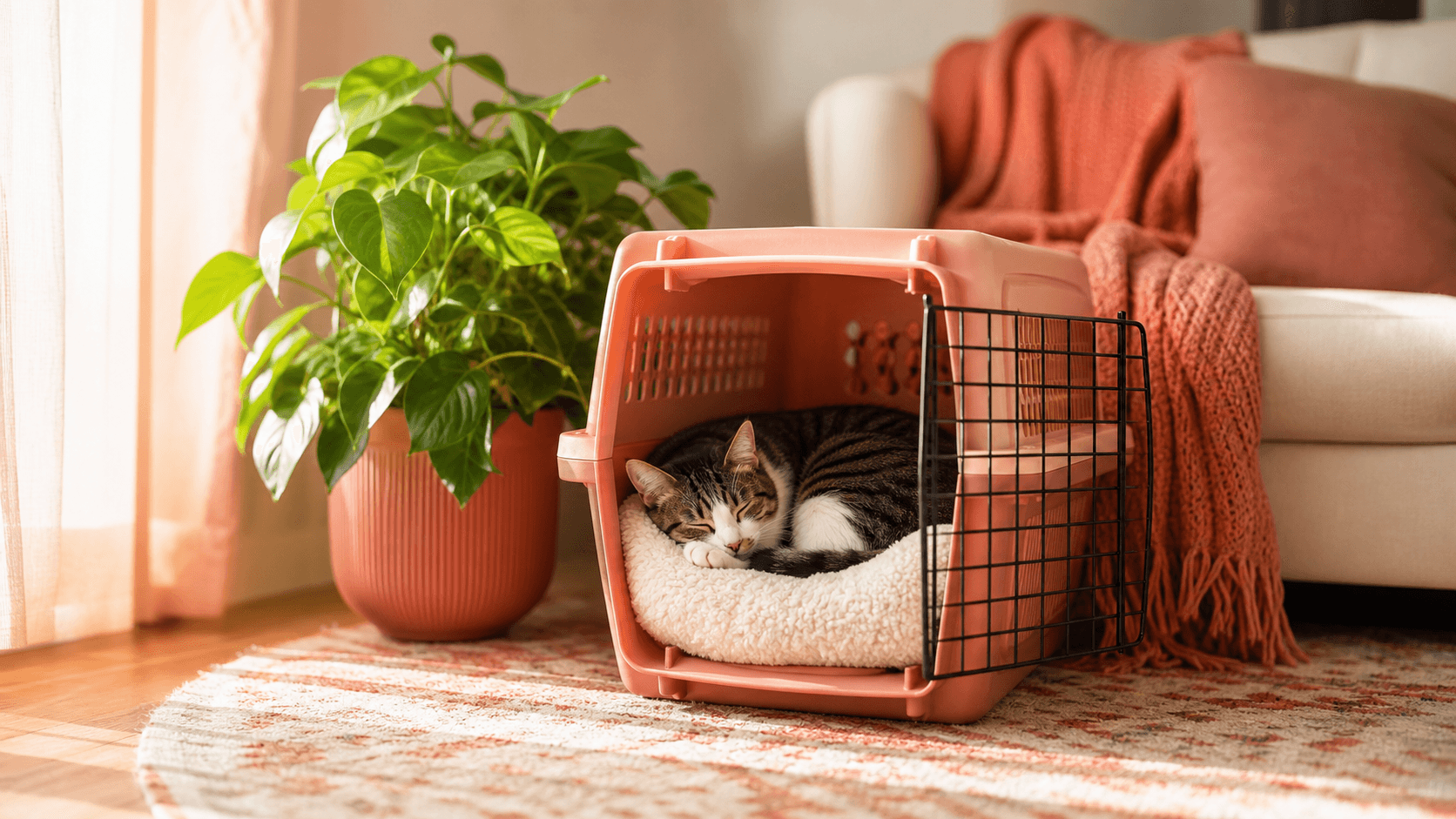
The carrier should not be the object that appears five minutes before everyone is late, sweaty, and crawling under the sofa.
For many apartment cats in Singapore, Malaysia, and Indonesia, travel cues are rare. They do not ride in lifts daily, wait at void decks, or follow you to the carpark the way some dogs do. If the carrier only comes out before a vet visit, it becomes a bright warning sign: hands, restraint, lift lobby, traffic, clinic smells.
Carrier training does not mean your cat has to adore the box. The goal is smaller and more useful: make it ordinary enough that vet day stops becoming a chase.
Use this as preparation for calmer handling and a better vet conversation, not as a way to diagnose pain, fear, or illness at home.
Start with the box doing nothing
Leave the carrier in a quiet part of the home for a few days. Door open, or door removed if the design allows it. Add bedding that already smells like your cat. Then ignore it.
That last part matters. Do not point at it, tap it, lure too hard, or suddenly decide today is the day your cat becomes brave. Let the carrier become part of the furniture: beside a bookshelf, near a familiar resting spot, or somewhere your cat already passes on the way to food or water.
Normal early reactions include freezing for a moment, sniffing from across the room, circling it, or refusing to enter. That is not stubbornness. It usually means the carrier has become linked with threat or loss of control, so the next step needs to be smaller.
Move food only as fast as your cat stays loose
Start with meals or a few high-value treats near the carrier entrance. When your cat eats there without tension, place the food just inside. Later, move it farther back.
Good progress looks boring: your cat walks over, eats, pauses, leaves, and returns another day. If your cat stretches its neck in while keeping all four paws outside, that still counts as information. Stay there for a few sessions instead of pushing for a full entry.
Once entry is easy, practise the door for one or two seconds. Close it, open it, and let your cat leave. Build from there only if the cat remains settled. The point is not to trap the cat successfully; it is to teach that the door closing does not always predict a bad outing.
Count training treats as part of the day’s food, because treats are still food.
Add movement in tiny pieces
A cat who can eat inside the carrier calmly can start learning the next cues.
First, lift the carrier a few centimetres and put it down. Another day, carry it across the room. Later, walk to the front door, the lift lobby, or the carpark, then return home without a clinic visit. For condo and HDB cats, even the sound of the lift, corridor traffic, or a neighbour’s dog can be part of the learning curve.
Short, dull rehearsals help travel feel less like a single dramatic event. Keep them brief, end before your cat spirals, and return to an easier step if the carrier suddenly becomes suspicious again.
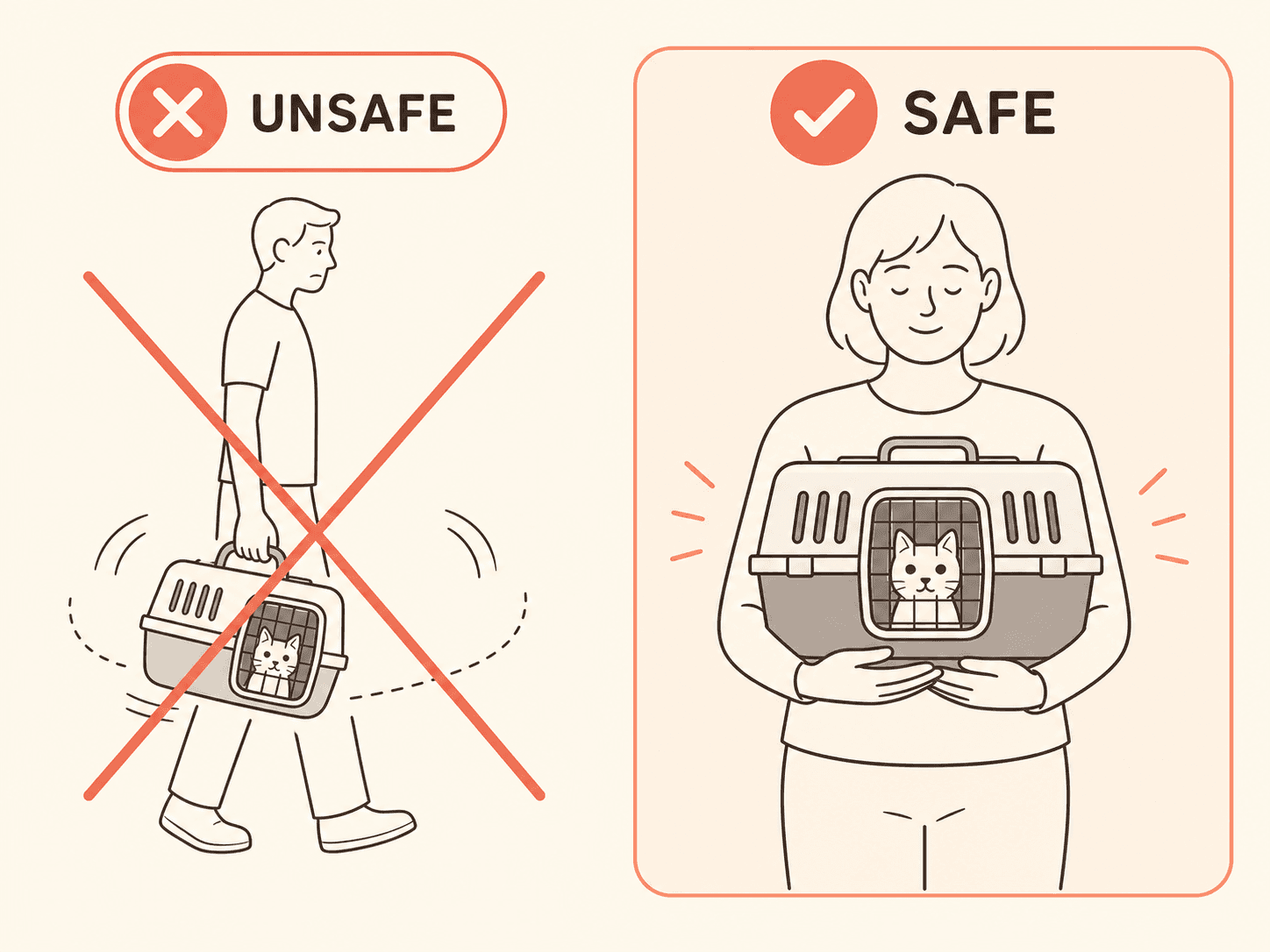
Choose a sturdy carrier with front and top openings if you can. It makes loading calmer and may let clinic staff examine some cats while the carrier base stays in place. During transport, secure the carrier so it cannot slide or tip. A towel over part of it may reduce visual stress, as long as airflow stays clear.
In tropical SG/MY/ID conditions, transport safety also matters. Do not leave cats in parked vehicles, and use a carrier that allows airflow without creating an escape risk.
Synthetic feline facial pheromone may help some cats, but use it as support, not a substitute for practice.
Know when this is not just training
Carrier training should make a cautious cat calmer over time. It should not create panic or injury.
Act sooner if you see panic-level escape attempts, persistent hiding after carrier practice, panting, open-mouth breathing, fear-related urination or defecation, aggression, or signs of pain when lifted. Use this guide to prepare for the vet conversation, not to diagnose your cat at home.
Pause the plan if the resistance is new, worsening, or suddenly linked with being picked up. Watch for appetite change, litter-box change, altered gait, hiding, or aggression. Pain can look like "bad behaviour" in cats, especially when handling is involved. Stress can also show up around toileting and avoidance.
If your cat starts biting, scratching, injuring itself, or becoming impossible to handle safely, this is no longer a home patience project. Involve a veterinarian first, especially if the behaviour has changed. If the cat is medically cleared but the handling problem remains, ask for a qualified behaviour professional who uses humane, evidence-based methods.
Train calm cats. Refer distressed cats. A cat who can still eat, sniff, pause, and choose can practise. A cat who panics, hides persistently, becomes aggressive, or seems painful needs professional help before the next step.
Before the next appointment
Write down three things before you call the clinic or book the visit: what your cat does when the carrier appears, what happens when you lift them, and whether appetite, litter-box habits, walking, or hiding have changed. That short note is more useful than saying "she hates the carrier" while everyone is already stressed.
Manja
— Manja