
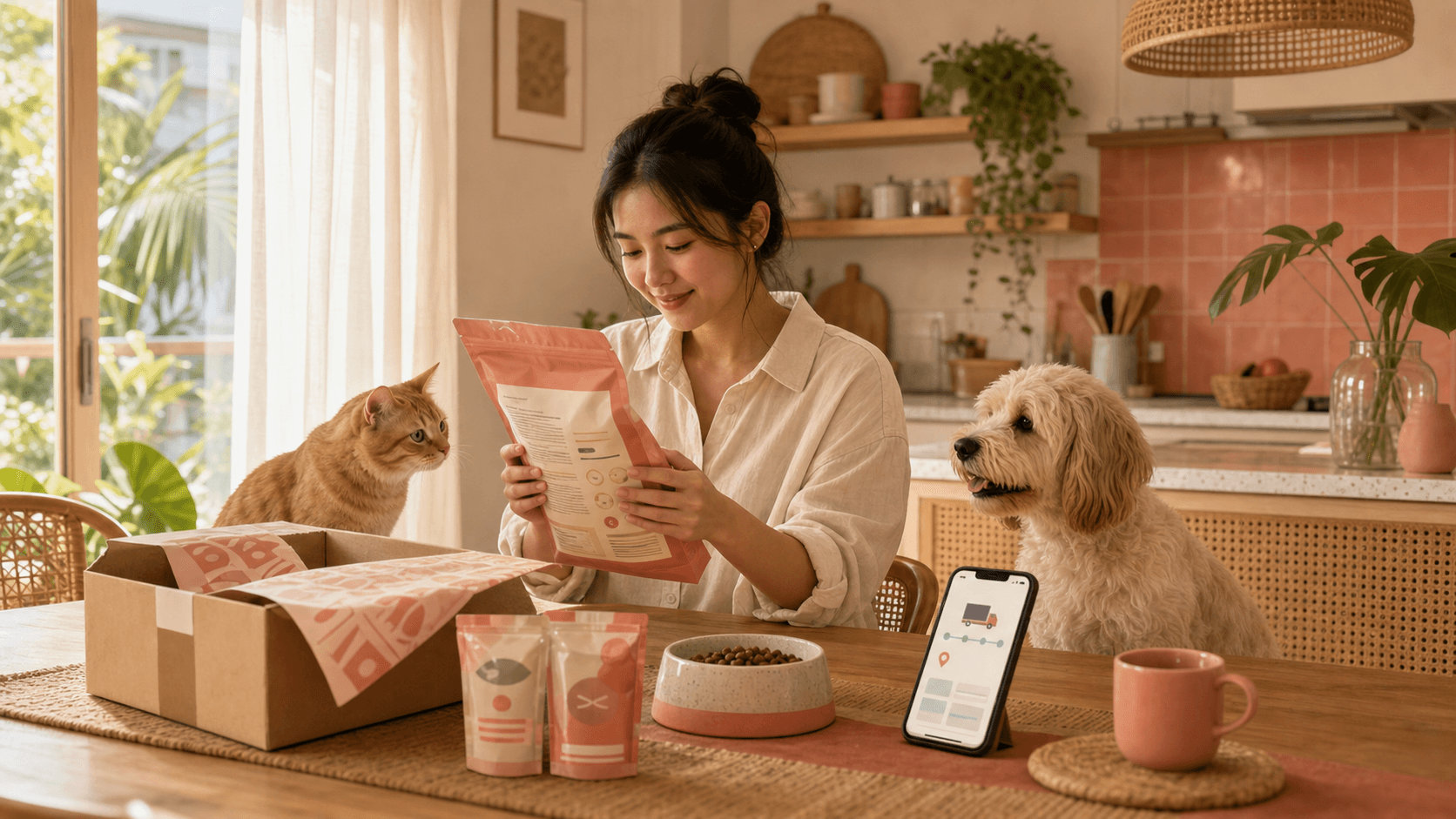
A cheap carton of cans is only a bargain if your cat can safely eat it. Before the first bowl, slow down for three checks: what the label says, who sold it, and what shape the food arrived in.
This guide is for cat and dog owners buying food or treats through Singapore, Malaysia, and Indonesia marketplaces, third-party sellers, or delivery apps. It is editorial guidance, not a diagnosis or a brand recommendation. If your pet has weight loss, urinary signs, kidney disease, diabetes, allergies, gut disease, heart disease, or a vet-prescribed diet, use this to prepare the vet conversation, not to choose treatment at home.
Read the listing like a cautious owner
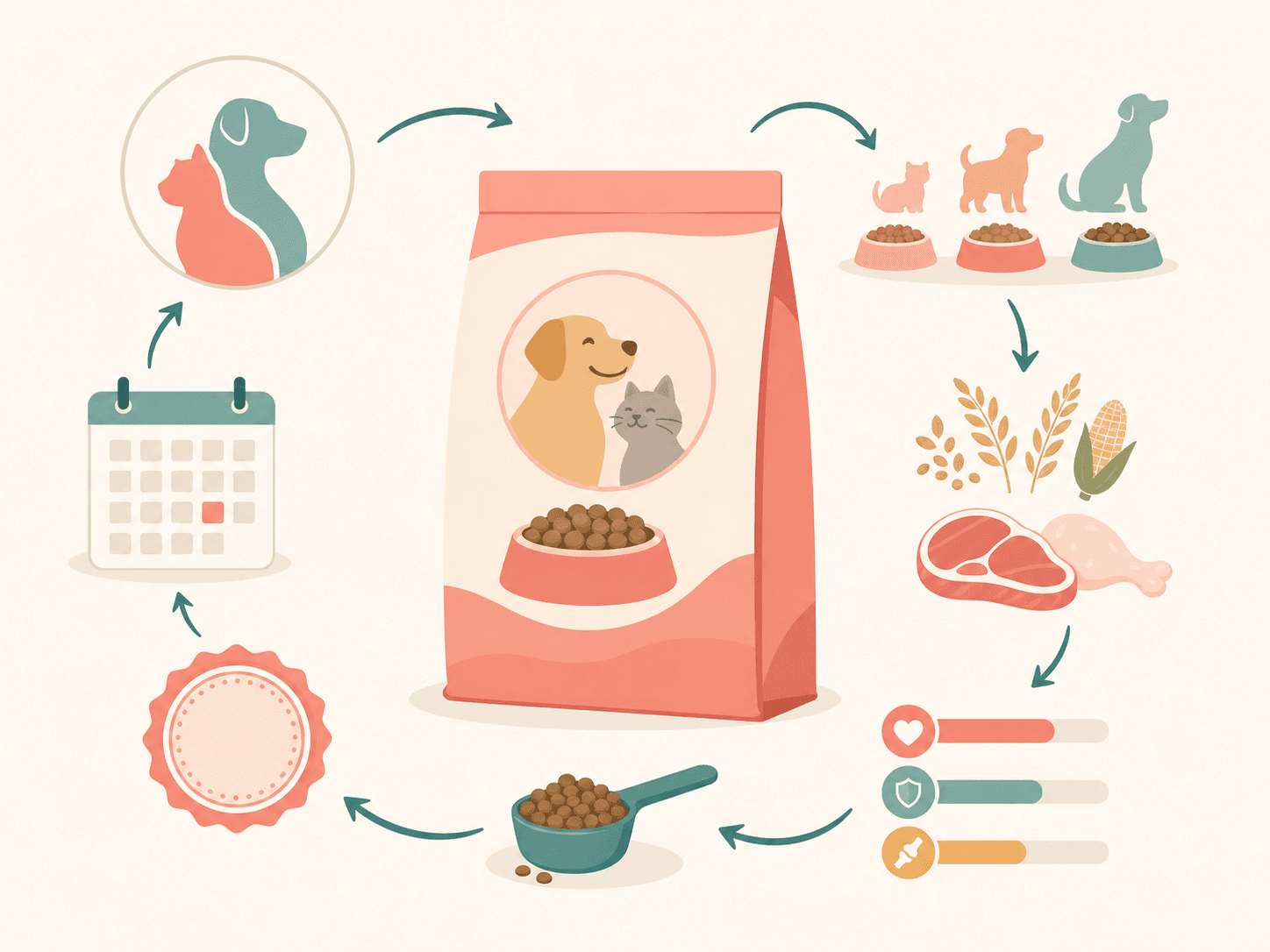
Start with the dull details. They tell you more than the promo banner.
Check that the food is for the right species. Cat food is for cats, dog food is for dogs; do not swap them as a meal plan unless the label and your vet support it. Then look for the life stage, nutritional adequacy statement, and feeding directions. A puppy, kitten, adult, senior, pregnant animal, or pet on a therapeutic diet may need a different answer from the one with the biggest discount.
Before you order, make sure the listing or seller can show the basics: ingredients, guaranteed analysis, manufacturer or distributor, lot or batch code, and expiry or best-before date. Reviews, discounts, and “vet-approved” wording do not prove the diet fits your pet.
Singapore, Malaysia, and Indonesia all have controls around pet food, animal feed, animal products, or imports. That still does not prove one online listing is authentic, fresh, legally imported, nutritionally suitable, or safe for your individual cat or dog.
Inspect the delivery before feeding
Do this before the bag disappears into the kitchen corner or the cans get stacked behind the rice cooker.
Keep the original dry-food bag when possible, even if you use an airtight container. The bag carries the product name, lot or batch code, expiry or best-before date, and manufacturer or distributor details you may need if something looks wrong.
Do not feed food that is expired, swollen, leaking, unsealed, mouldy, rancid-smelling, pest-contaminated, or in damaged packaging. For wet food, the numbers are tighter than most owners assume. Hill's puts concrete limits on opened cans: empty the bowl of uneaten moist or canned food within 4 hours when the room is warmer than 50°F (10°C), and keep an opened can refrigerated (40–45°F / 4–7°C) for a maximum of 5–7 days. In a tropical kitchen that 4-hour clock is the one that bites first, so cover and refrigerate any uneaten portion promptly rather than topping the bowl up later.
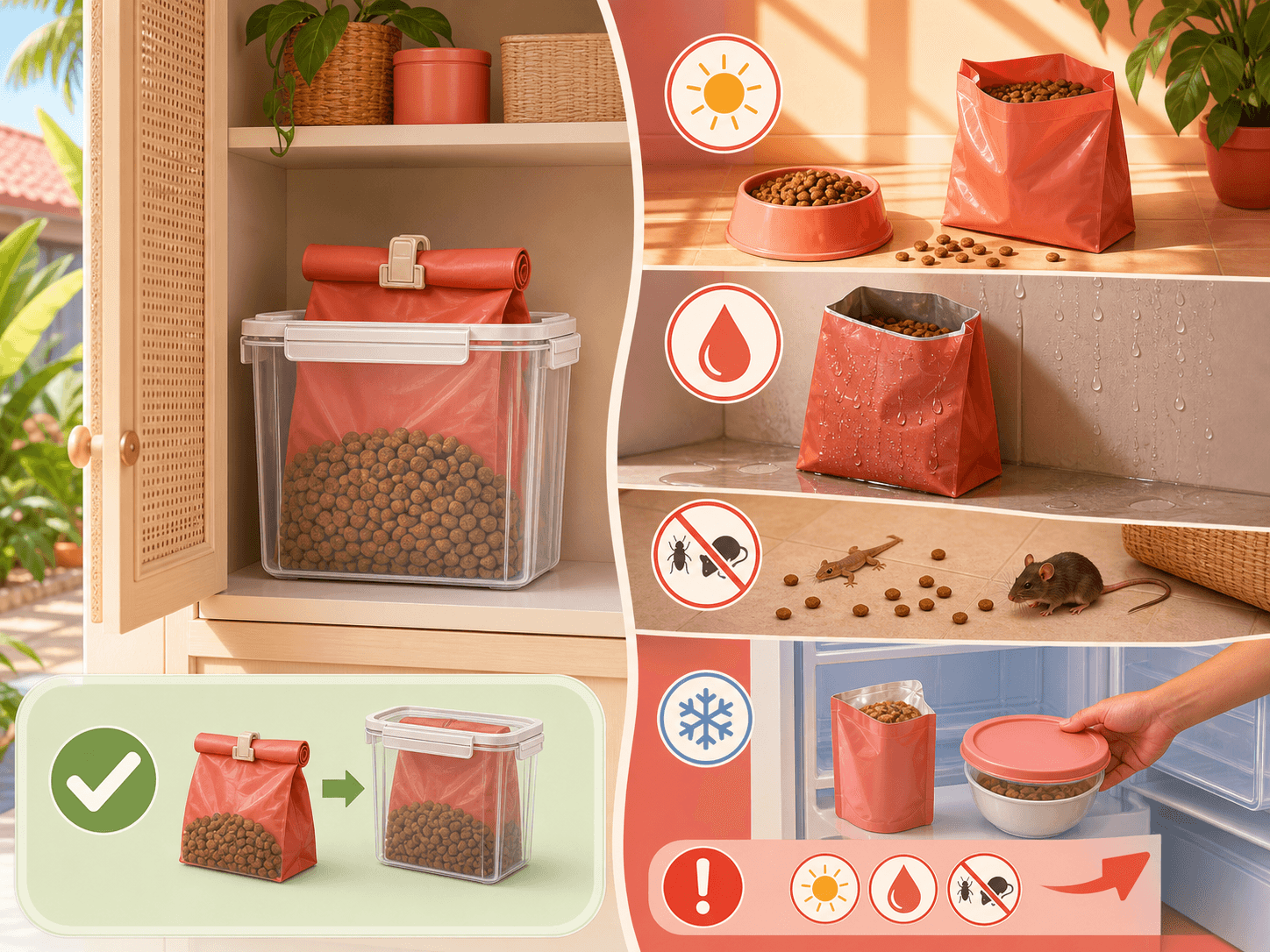
Humidity matters in this region. A resealed bag left beside a warm washing-machine area, damp service yard, or sunny kitchen window can spoil sooner than the best-before date suggests. Store opened dry food in a cool, dry place, in its original bag with the top folded down tight and the label still readable.
If the food looks or smells wrong, stop feeding it. Keep the package details, product name, lot number, best-by date, and purchase location before reporting the problem. A discount is not worth risking your pet's health.
Know when this is no longer an online-shopping question
Buying food online is a label-and-storage job. Choosing a diet for a sick cat or dog is not.
Ask a vet before using marketplace reviews, discounts, seller claims, or ingredient lists to make decisions for a pet with weight loss, urinary signs, kidney disease, diabetes, allergies, gastrointestinal disease, or cardiac disease. The same applies to therapeutic diets, multi-supplement routines, pregnancy, young animals, seniors, chronic illness, liver disease, kidney disease, medication interactions, dosing, or any product that sounds like it treats disease.
Bring the product name, species and life-stage label, nutritional adequacy statement, ingredient list, guaranteed analysis, feeding directions, manufacturer or distributor details, lot or batch code, expiry or best-before date, and where you bought it. That gives your vet something concrete to assess.
Before the next bowl
Check the pack in your hand: species, life stage, expiry or best-before date, seal, smell, and seller trail. If anything is damaged, swollen, leaking, unsealed, mouldy, rancid-smelling, pest-contaminated, or expired, do not feed it.
— Manja