
Your parrot's apartment is part of its care plan. Heat, closed windows, stale routines, and long solo hours can turn a nice cage into a welfare problem.
Start with three checks: the room, the bird, and the boredom. Catch the small changes before they become dramatic.
What the risk is and why now
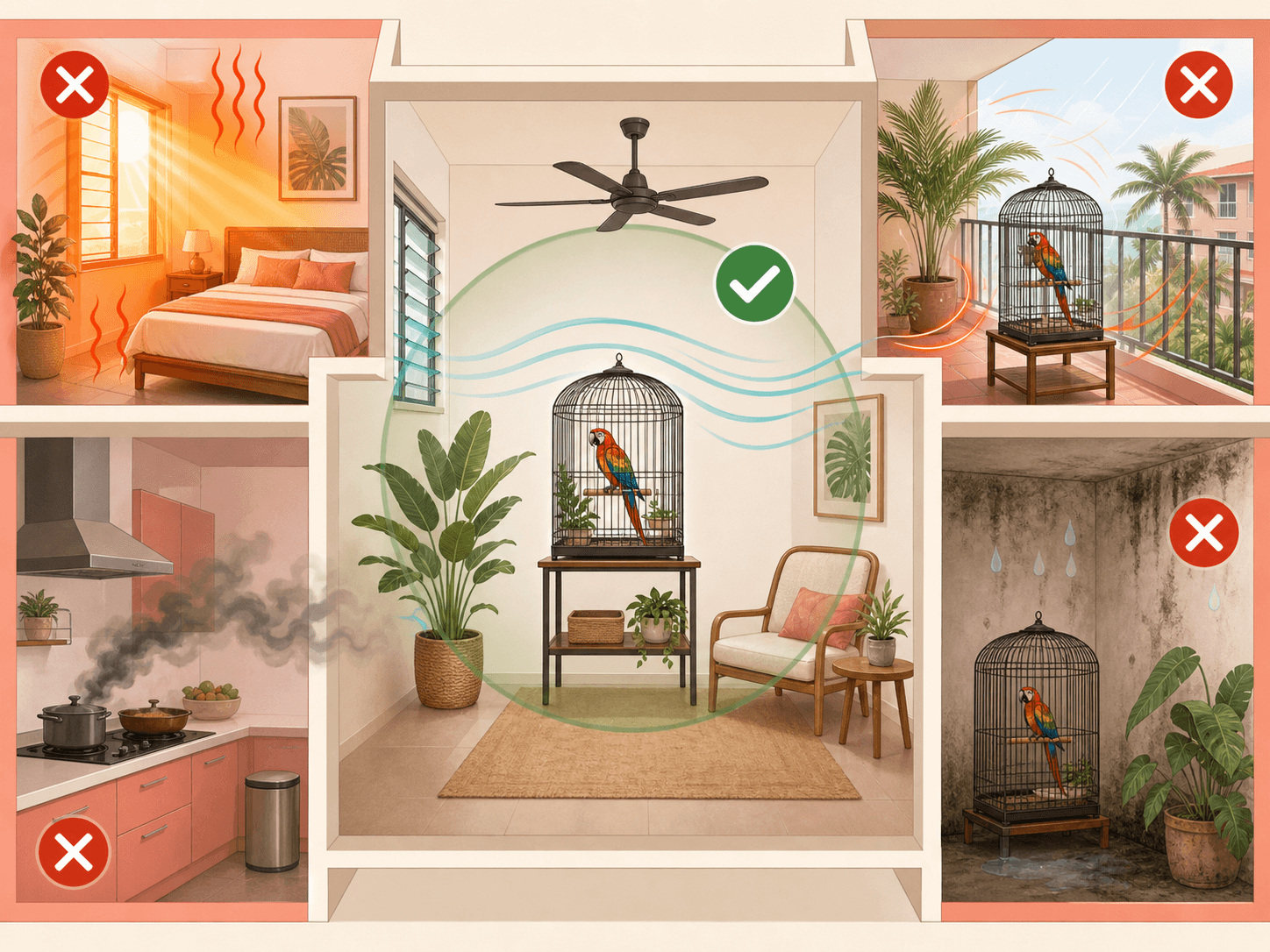
This guide is for parrot owners in Singapore, Malaysia, and Indonesia who keep birds indoors, especially in high-rise homes. Singapore is consistently hot and humid, with mean daily maximum temperatures around the low 30s Celsius and high relative humidity. A cage does not need direct sun to become uncomfortable.
Those outdoor numbers matter because companion parrots have a much narrower comfort band than the weather outside. The RSPCA advises that birds who would normally live in tropical or subtropical habitats need an ambient temperature between 12 and 26°C. For humidity, most parrot species are kept comfortable at around 50% to 70% relative humidity; pushing past roughly 70% encourages mould and mildew, while very dry air can dry the skin and airways. The point is not to chase a perfect number, but to notice when a closed-up tropical room drifts above the upper end of that range.
Haze can change the room quickly. Singapore public-health advice during haze episodes includes reducing exposure to outdoor air, so windows may stay shut and indoor ventilation has to do more work. Malaysia publishes Air Pollutant Index readings, and Indonesia's BMKG provides official weather and climate information. Treat those updates as bird-room prompts, not just commute news.
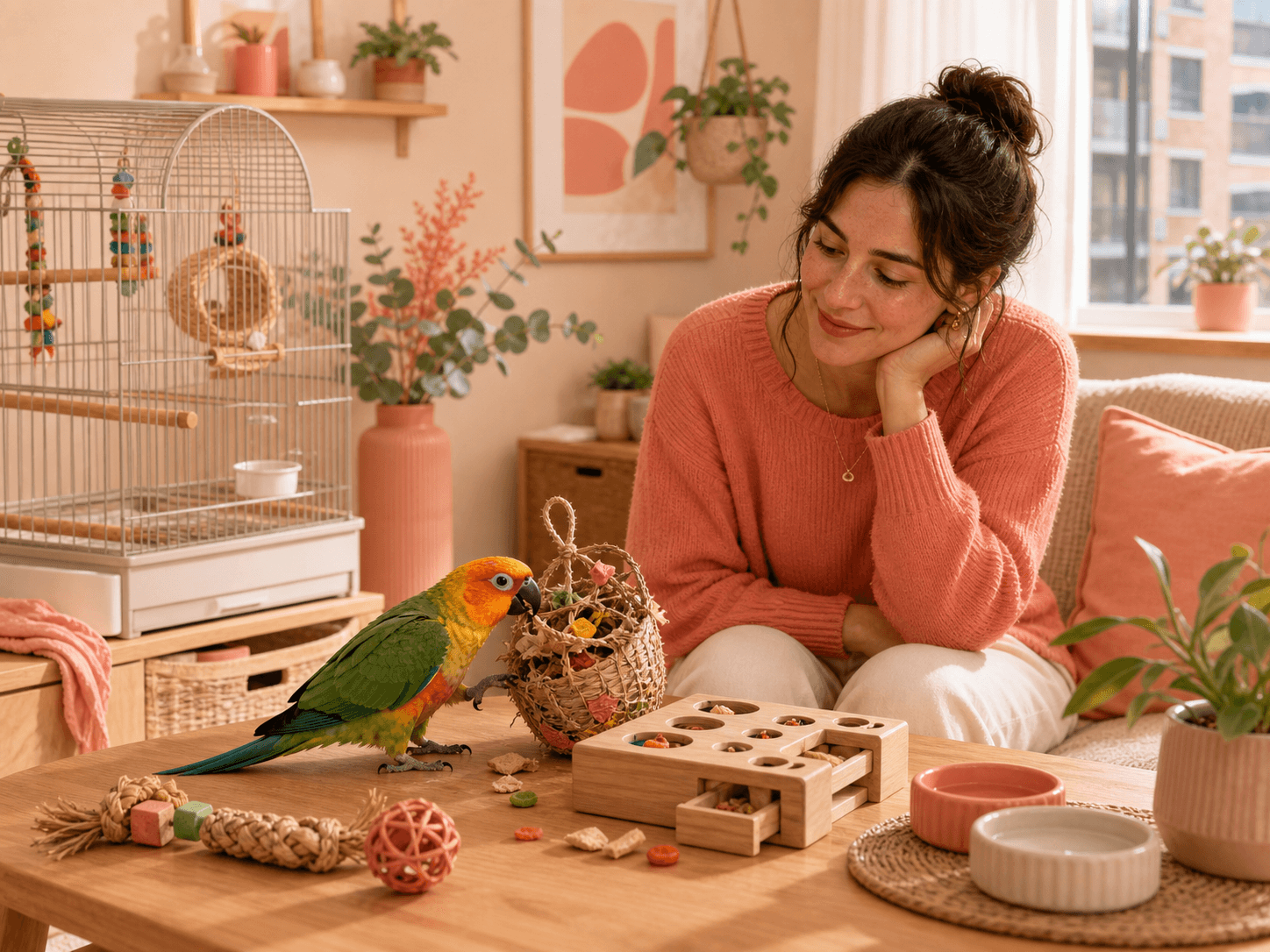
Then there is boredom. Parrots are intelligent, social animals. They need environmental complexity and chances to do normal bird things. The RSPCA recommends that parrots be out of the cage, interacting and exercising, for at least six hours every day. In an HDB flat or apartment, long solo hours can become a welfare issue when the cage, room, and routine stay bare and that out-of-cage time keeps getting skipped.
Use this as an owner check, not a home diagnosis. If your parrot looks unwell, ask an avian vet.
The signs to watch for
Watch the bird you actually live with, not the perfect parrot from a care sheet. One parrot may start the morning loud, hungry, and ready to argue with breakfast. Another may stay quiet until the room wakes up. The clue is change.
| Check | What to notice |
|---|---|
| Breathing | Open-mouth breathing, panting, or laboured breathing |
| Wings and posture | Wings held away from the body, fluffed feathers, sitting low, or looking less responsive |
| Energy | Weakness, collapse, unusual quietness, or less movement |
| Daily basics | Appetite, droppings, vocalisation, perch grip, sleep, and activity |
Open-mouth breathing, panting, wings held away from the body, weakness, collapse, and obvious distress are not hot-room quirks to wait out. Move from "maybe it is just warm" to "this needs attention."
Pick one small baseline check each day. Look at the perch grip before the day gets busy. Notice whether breakfast is eaten normally. Check droppings before cleaning the cage paper. Listen for the usual calls. A parrot that is fluffed up, quiet, low in the cage, or less responsive may be hiding illness.
For boredom, inspect the setup, not just the bird. Foraging toys and puzzle feeders can help, but they must fit the bird's size and be monitored so the bird still eats and cannot trap toes, beak, or head. Remove broken, frayed, painted, rusty, or questionable chew items. Keep smoke, aerosols, strong fumes, and overheated non-stick cookware away from the bird's air.
When to see a vet
Open-mouth breathing at rest is a red flag. So are laboured breathing, collapse, seizures, severe weakness, bleeding, or any possible toxin or fume exposure. Do not cool the room and "see how it goes" while a parrot is struggling to breathe. Talk to your vet now, or seek emergency care.
Less urgent changes still deserve attention. A parrot that becomes quiet, less responsive, weak on the perch, less interested in food, or different in its droppings needs proper assessment. Use this guide to prepare for the vet conversation, not to diagnose your bird at home.
Bring evidence that helps. Note the diet, cage setup, room heat or humidity notes if you have them, and recent ventilation changes. Take photos of droppings. Bring or photograph enrichment items, especially foraging toys, chew objects, and anything damaged. Write a short timeline of appetite, vocalisation, feathers, sleep, and activity changes.
Tonight, choose one baseline to track: breathing, appetite, droppings, or perch grip. Write down what is normal for your parrot before the next hot, hazy, or stormy day.
- Manja