
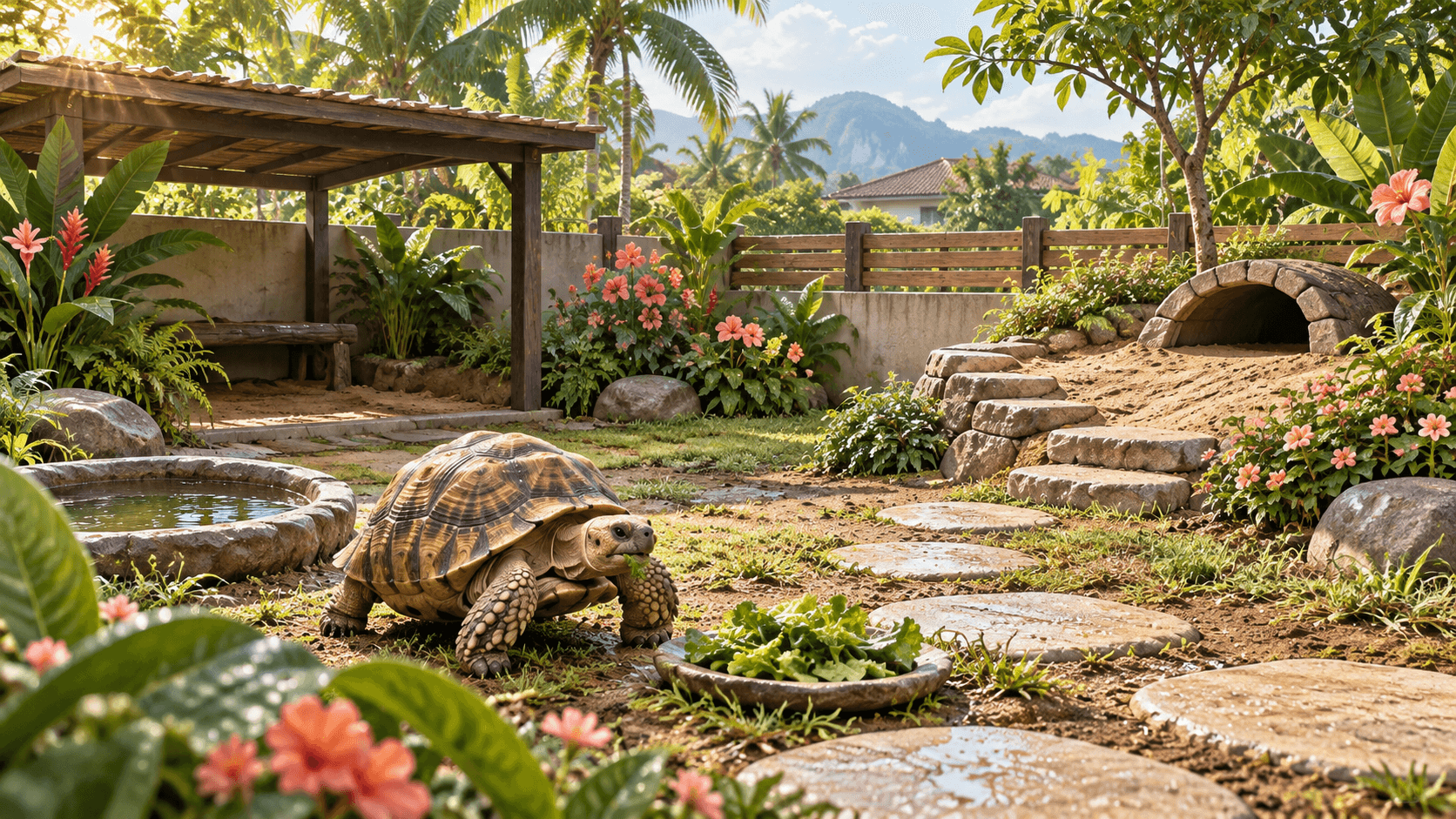
A tortoise is not a cute slow pet with a small box problem; it is a long-term housing, sunlight, legality, diet, and vet-access decision.
Use this guide to prepare for the vet conversation, not to diagnose a tortoise at home. The better question is not “Can my child keep one?” It is “Can the adults in this home support this animal for several decades?” Merck Veterinary Manual describes reptiles as long-lived animals that need species-appropriate husbandry, diet, lighting, and veterinary care.
Start with the exact species, not the shop name
Common names are too loose for a Malaysian tortoise decision. “Star tortoise” and “sulcata” may sound specific at the counter, but legality and trade controls are checked by scientific name, not by pet-shop shorthand.
Before money changes hands, ask for the exact species, permit status, import or captive-bred documentation, and seller paperwork. Then check the species against the CITES Appendices and the CITES Species+ Database. Many Testudinidae species appear in CITES Appendix I or II, which means international trade controls may apply.
For Malaysia, also check with the relevant wildlife authority before purchase or adoption. The Department of Wildlife and National Parks Peninsular Malaysia is the starting point for ownership and permit questions in Peninsular Malaysia. Do not rely on “the seller said okay” as your only legal check. TRAFFIC, the wildlife trade monitoring network, has documented illegal and unsustainable wildlife trade in Southeast Asia, including reptiles.
| Before acquisition | What to verify | Why it matters |
|---|---|---|
| Species identity | Scientific name | CITES and permits are species-level checks |
| Seller paperwork | Permit status and documentation | Common names are not enough |
| Source history | Import or captive-bred documents | Undocumented exotic pets carry legal and welfare risk |
| Vet access | Routine and emergency reptile options | Tortoises need knowledgeable veterinary care |
Plan for the adult tortoise, not the baby you saw
A hatchling can trick the whole family. It looks manageable. The adult animal may need a very different life.
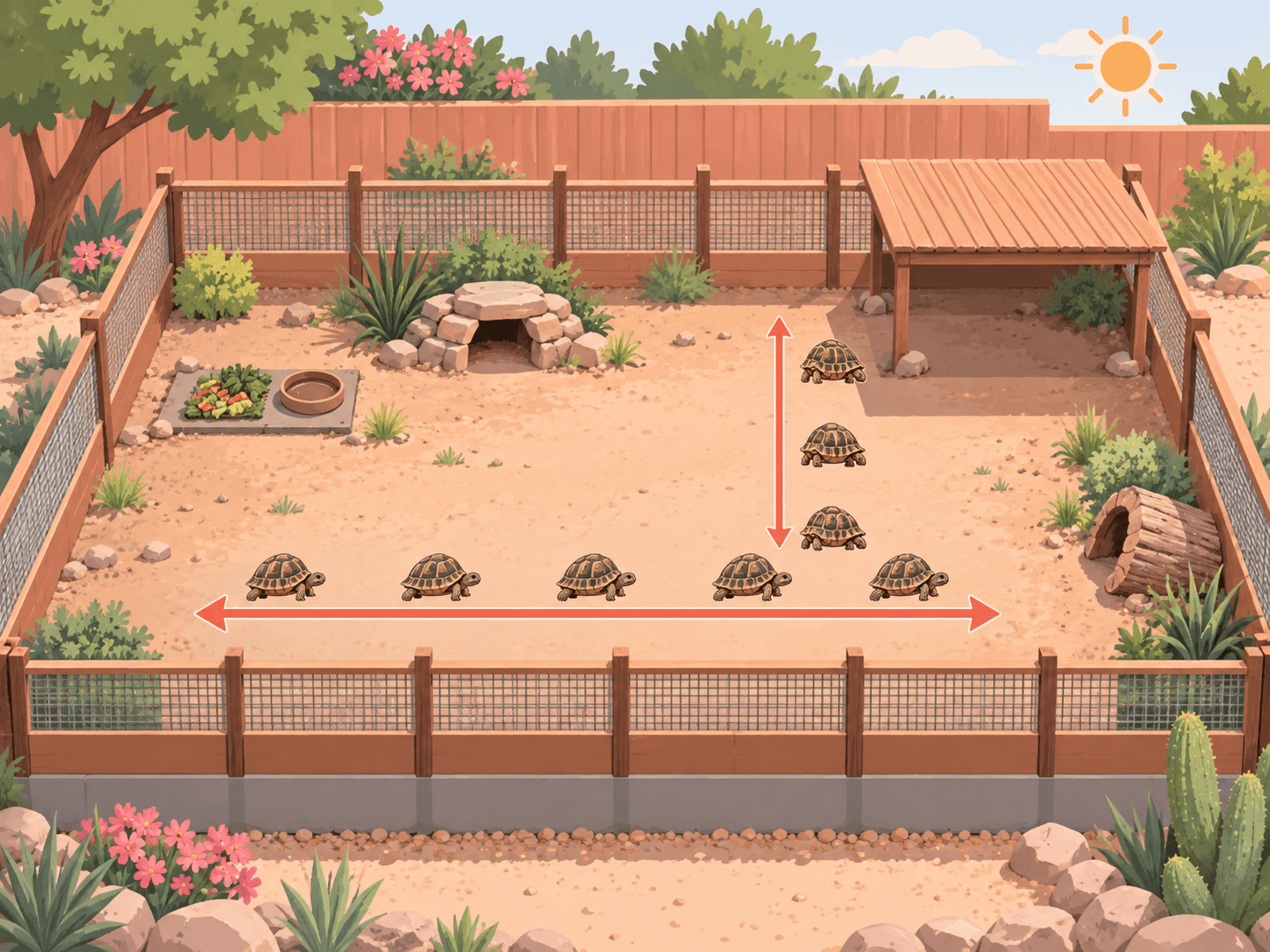
Small-to-medium tortoises need a large, secure outdoor enclosure, not a decorative indoor corner. A recognized body-size standard is at least 10 times the tortoise shell length long and 5 times the shell length wide, with secure boundaries, shade, shelter, and escape prevention. That standard is reflected in tortoise environment guidance from the RSPCA and large-outdoor-housing guidance from Tortoise Trust.
Large tortoises, including sulcata or African spurred tortoises, are a different tier. They need yard-scale outdoor housing and fencing strong enough for a heavy burrowing species. A starter enclosure does not mature with the animal. Your plan has to.
| Tortoise tier | Housing implication | Non-negotiables |
|---|---|---|
| Small-to-medium tortoise | At least 10x shell length long and 5x shell length wide | Secure boundary, shade, shelter, escape prevention |
| Large tortoise such as sulcata | Yard-scale outdoor enclosure | Strong fencing, burrow-aware design, species-specific heat and diet |
| Any tortoise | Adult-care plan beyond childhood | Adult caregiver, housing continuity, reptile-capable vet access |
This is also where family planning gets honest. If the tortoise may live for several decades, the primary keeper cannot be “the child who really wants it.” Adults own the decision.
Sunlight and heat must be engineered, not hoped for
Tortoises need the right light and heat gradient. A sunny-looking indoor spot is not the same as usable UVB.
Tortoises need access to unfiltered UVB or correctly installed reptile UVB lighting to support vitamin D3 synthesis and calcium metabolism. Window glass does not substitute for UVB exposure. Calcium, vitamin D3, and ultraviolet exposure are linked in reptile bone health guidance from the Merck Veterinary Manual, and tortoise care guidance from Arizona Exotic Animal Hospital treats UVB, heat gradients, calcium, and diet as one husbandry system.
Heat also needs a gradient. Many terrestrial tortoises require a basking zone around 32–35°C and cooler retreat areas around 20–26°C, but the exact range must be matched to the species.
| Setup element | Practical requirement |
|---|---|
| UVB | Unfiltered sunlight or correctly installed reptile UVB lighting |
| Window sunlight | Not a UVB substitute |
| Basking zone | Around 32–35°C for many terrestrial tortoises |
| Cooler retreat | Around 20–26°C for many terrestrial tortoises |
| Final range | Confirm by exact species |
A single warm enclosure is not enough. The tortoise needs choice: warm up, cool down, hide, dry off, and move.
Malaysia’s rain changes the enclosure plan
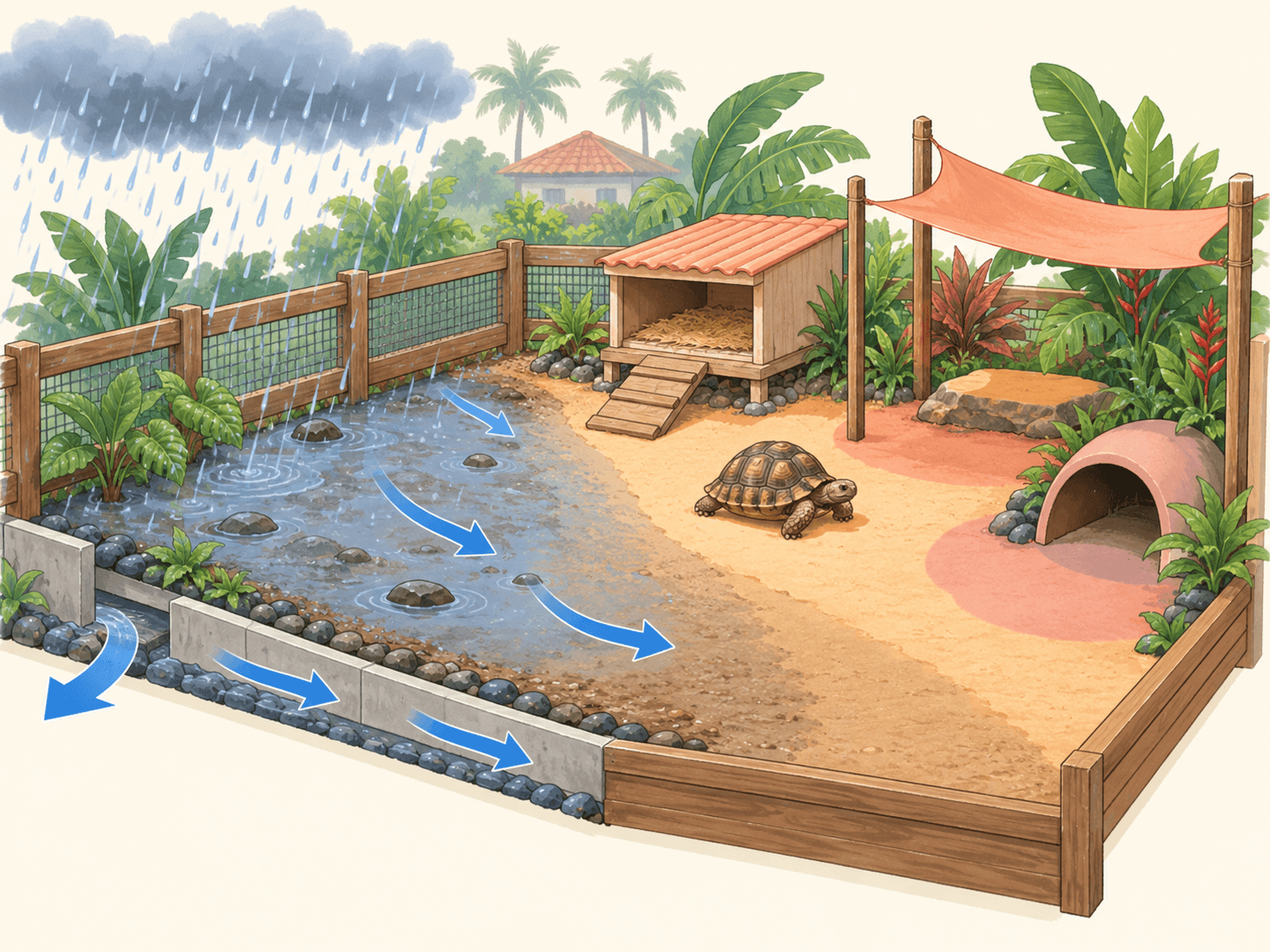
Outdoor tortoise housing in Malaysia has to respect rain. Monsoon conditions make drainage and dry retreats part of welfare, not extra polish.
Persistently wet substrate and waterlogged shelter can worsen shell, skin, and respiratory health risks. Merck’s reptile disease guidance links poor husbandry, including unsuitable humidity, temperature, sanitation, and nutrition, with reptile disease risk. The RSPCA environment guidance also stresses shelter, dry areas, and protection from unsuitable weather.
Good outdoor design should include a dry retreat zone, fast drainage, shade, secure edges, and a shelter that stays usable after heavy rain. If the only available space becomes damp and muddy for long stretches, pause the adoption plan. The enclosure is telling you something.
Diet depends on ecology, not “tortoise food”
Most commonly kept grazing tortoises need a high-fibre, low-protein, calcium-balanced diet based on grasses, weeds, leafy greens, and hay. Fruit and high-protein foods should be limited or avoided depending on species. That diet pattern is supported by Merck’s reptile nutrition guidance, which highlights fibre, calcium-to-phosphorus balance, and nutritional excesses in herbivorous reptiles.
But not every tortoise is an arid grazing species. Some tropical forest tortoises have different dietary needs. A single generic “tortoise diet” is unsafe because reptile diets differ by natural feeding strategy.
| Species ecology | Diet direction |
|---|---|
| Herbivorous grazing tortoise | Grasses, weeds, leafy greens, hay; high fibre; low protein; calcium balanced |
| Tropical forest tortoise | Match diet to species ecology |
| Any tortoise | Do not use one generic tortoise diet |
| Supplements | Treat calcium and vitamin D3 as part of UVB, diet, and vet guidance |
Be careful with supplement claims. Calcium and vitamin D3 support make sense only inside the whole husbandry picture: UVB, diet, species needs, and veterinary advice. A powder cannot fix poor lighting or the wrong diet.
What changed, and why
We used to talk about tortoises as “easy” because they are quiet, slow, and not needy in the way a kitten is needy. That framing was too shallow.
The better standard is pre-adoption proof. Can you identify the species by scientific name? Can you verify legality in Malaysia? Can you build the adult enclosure, not the baby enclosure? Can you provide UVB, heat gradients, drainage, species-matched food, and reptile-capable veterinary care?
If the answer is not yet, wait. The small thing to do this week is to write down the exact species you are considering, then verify legality, adult housing, and a reptile vet before you meet the animal.
— Manja