
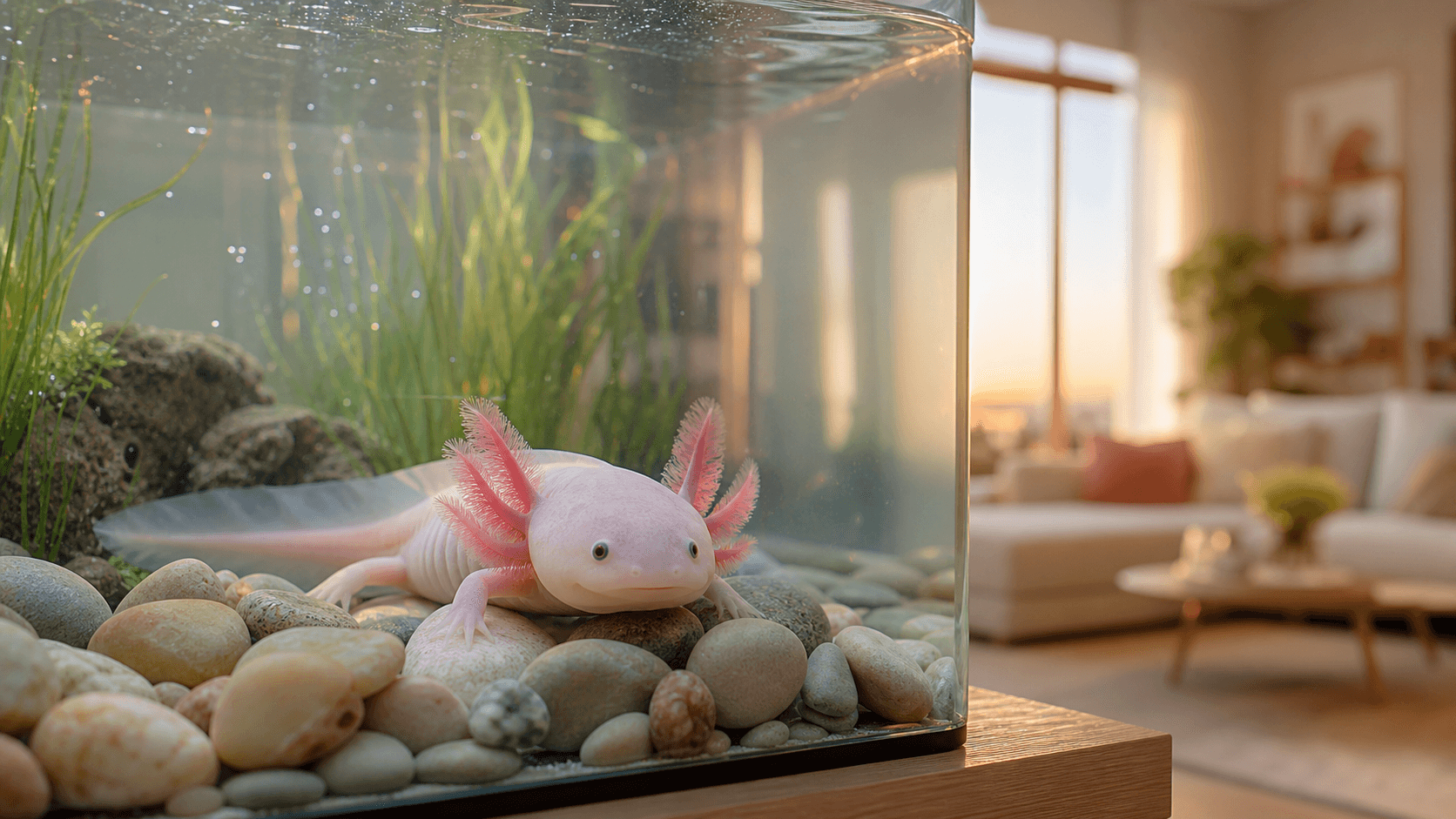
A tank can look perfect in the shop and still be wrong for an axolotl in a Singapore, Malaysia, or Indonesia apartment. The problem is not decoration. It is temperature.
Axolotls are cold-water animals. In local flats, warm rooms, humid evenings, air-con cycles, and sunny window spots can push the tank out of range quickly. Before you buy the animal, prove that the tank can stay cool and cycled without guesswork.
Build the cold-water system first
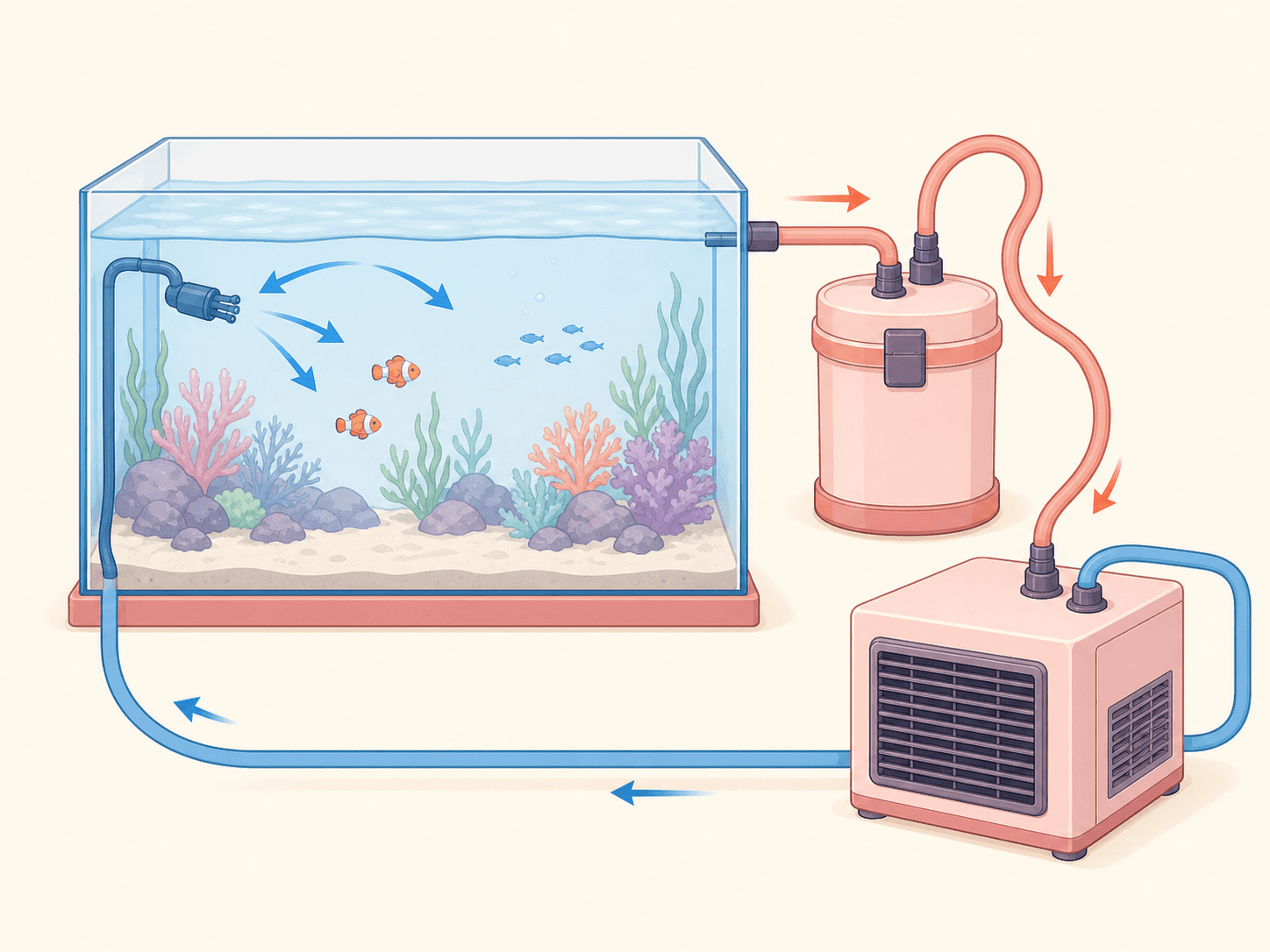
Axolotls are a cold-water amphibian, so a normal tropical fish setup is the wrong starting point. The recognized husbandry baselines below are the numbers your vet works from — they adjust for your individual animal, its size, and its life stage.
| Parameter | Recognized baseline | Tier / note | Source |
|---|---|---|---|
| Water temperature (optimum) | 16–18 °C | Adult axolotl; WSAVA and NSW education guidance cite 15–18 °C | RVC Exotics Service, WSAVA 2015 proceedings (VIN), NSW Dept of Education |
| Temperature stress ceiling | Never let it exceed ~22–24 °C; heat stress sets in above the low 20s | All life stages; NSW education says never exceed 22 °C, RVC says never exceed 24 °C | RVC Exotics Service, NSW Dept of Education, Vet Verified |
| Minimum tank volume (one axolotl) | ~75 L (20 gal) for a single adult; ~110 L (30 gal) is more forgiving for water quality | Adult; a single juvenile can start smaller (~38 L / 10 gal) | Catherine Love, DVM (Arbor View), Dr Scott Medlin, MEAMS, Vet Verified |
| Extra volume per additional axolotl | About +40 L per extra animal if you keep more than one | Vet sources stress axolotls are best housed alone; never mix different sizes | Vet Verified, RVC Exotics Service |
| Substrate | Bare bottom, or fine sand only (grain size under ~1 mm); never gravel or small hard pieces | Gravel can be swallowed during suction feeding and be fatal | RVC Exotics Service, Catherine Love, DVM (Arbor View), Axolotl Portal substrate guide |
Footprint matters more than height: axolotls live on the bottom, so length and floor area count for more than a deep column of water.
A passive aquarium fan may help in some rooms, but evaporative cooling depends on humidity, airflow, and room temperature. In a humid apartment, fans can struggle. A properly sized aquarium chiller is often the more reliable way to hold the range — both the Catherine Love, DVM and MEAMS care sheets note that getting water below room temperature in a warm climate usually needs a chiller.
Do not add the axolotl until the tank is fully cycled. Ammonia and nitrite should both read 0 ppm, and the recognized targets for the rest of the water chemistry are below — test the water yourself rather than relying on how clear it looks, because clear water can still be unsafe.
| Water parameter | Recognized baseline | Tier / note | Source |
|---|---|---|---|
| Ammonia | 0 ppm (undetectable) | All life stages; toxic at any reading | WSAVA 2015 proceedings (VIN), Catherine Love, DVM (Arbor View), Dr Scott Medlin, MEAMS |
| Nitrite | 0 ppm (undetectable) | All life stages; risk above 0.5 mg/L, lethal above 2 mg/L | WSAVA 2015 proceedings (VIN), Dr Scott Medlin, MEAMS |
| Nitrate | Keep low: under ~10 mg/L is the optimal target; below ~20 mg/L is acceptable | All life stages; rises between water changes signal an undersized filter | WSAVA 2015 proceedings (VIN), Vet Verified |
| pH | 7.4–7.6 ideal; roughly 6.5–8.0 tolerated | All life stages; a high pH makes any ammonia more toxic | RVC Exotics Service, WSAVA 2015 proceedings (VIN), Catherine Love, DVM (Arbor View) |
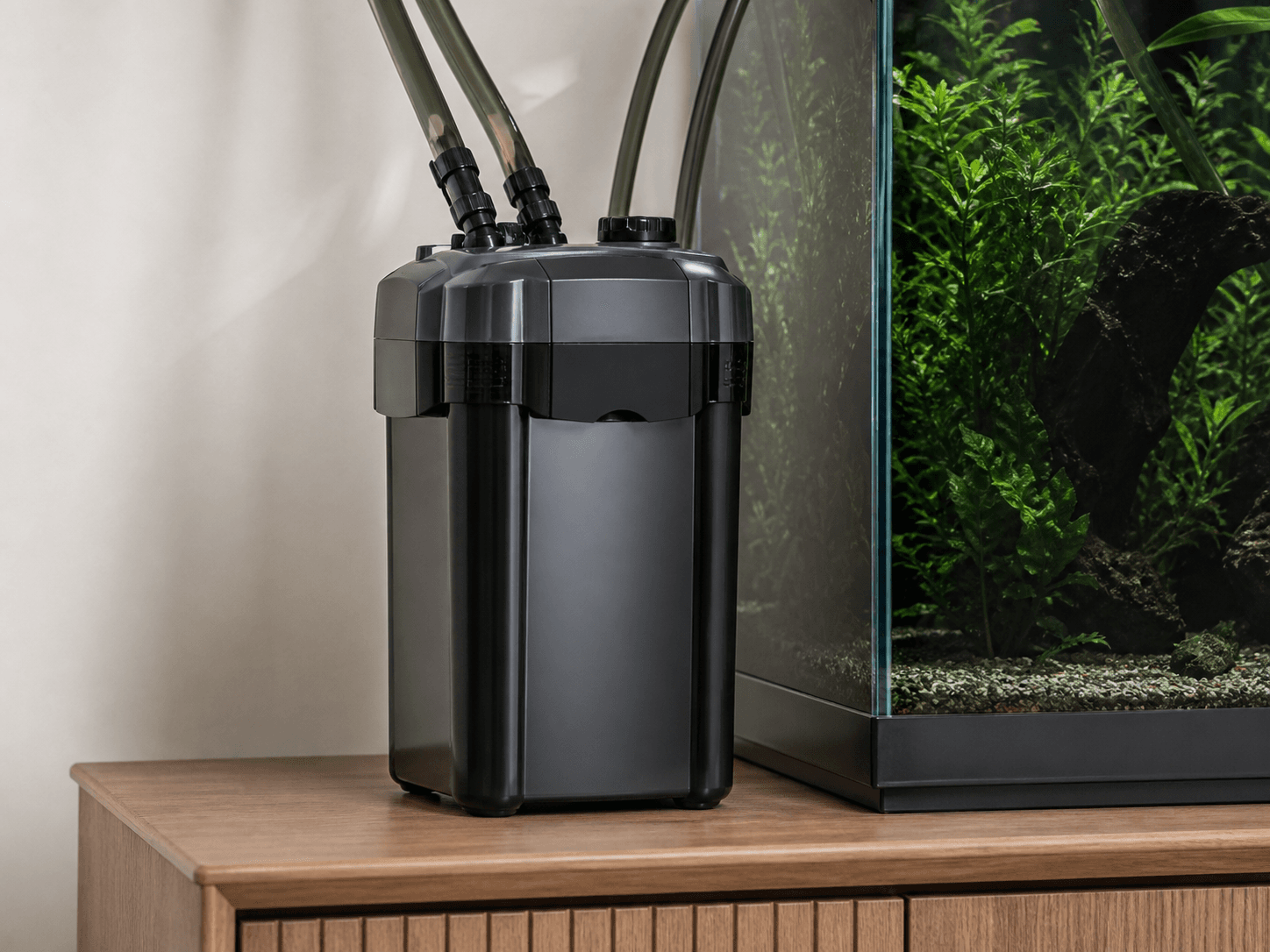
Keep filtration gentle. Axolotls do not need to be pushed around the tank by a strong current, so use sponge filters, spray bars, or another flow-diffusing setup if the filter output is too forceful.
For the tank floor, avoid gravel and small hard substrates because axolotls can swallow them during suction feeding. Bare-bottom tanks or fine sand (grain size under about 1 mm) are the safer options, as set out in the substrate row above.
Use this guide to prepare for the vet conversation, not to diagnose an axolotl at home.
The daily check is short, but strict
Run the tank like a cold-water system, not a tropical fish tank with a cute dragon inside. Check these in the same order each time:
- Water temperature: aim for 16–18 °C / 60–64 °F, and never let it climb past the low 20s °C (RVC Exotics Service, WSAVA 2015 proceedings (VIN)).
- Ammonia and nitrite: both should read 0 ppm (WSAVA 2015 proceedings (VIN)).
- Flow: the filter should not blast the axolotl around the tank.
- Substrate: bare bottom or fine sand only — no gravel or small hard pieces that could be swallowed.
- Food waste: remove uneaten food promptly to protect water quality.
- Behaviour: note changes in appetite, floating, buoyancy, gills, tail posture, and skin or gill appearance.
Earthworms, nightcrawlers, and appropriate sinking carnivore pellets are common food options — for example, a sinking pellet such as Hikari, named in the MEAMS exotics care sheet (Dr Scott Medlin, MEAMS). Feed in a way that lets you remove leftovers easily, especially in smaller apartment tanks where waste can turn the water fast.
The common mistake is treating one problem as isolated. Warm water, dirty water, high flow, and leftover food all push the tank in the wrong direction.
Signs that need an exotic-animal vet
Call an exotic-animal vet urgently if your axolotl shows marked gill curling, tail curling, abnormal floating, persistent buoyancy problems, appetite loss, or skin or gill growths that look fungal. These are triage signs. They are not puzzles to solve by changing three tank settings and hoping for the best.
While arranging help, check the tank details the clinic will ask about: current water temperature, whether the tank is fully cycled, ammonia, nitrite, nitrate, pH, filter flow, substrate type, recent food offered, and whether tap water has been treated with an aquarium conditioner suitable for chloramine-treated water.
Remove uneaten food. Look for swallowed-substrate risks if the tank uses gravel or small hard pieces. Do not delay urgent review just because you found one husbandry issue to correct.
What to have ready for the call
Write down the current water temperature, ammonia, nitrite, nitrate, pH, food offered, and the exact sign you noticed. Add when it started and whether more than one sign appeared together. That note makes the vet call sharper and faster.
When a pet might be unwell, talk to your vet now, especially if the signs persist or more than one appears together.
— Manja