
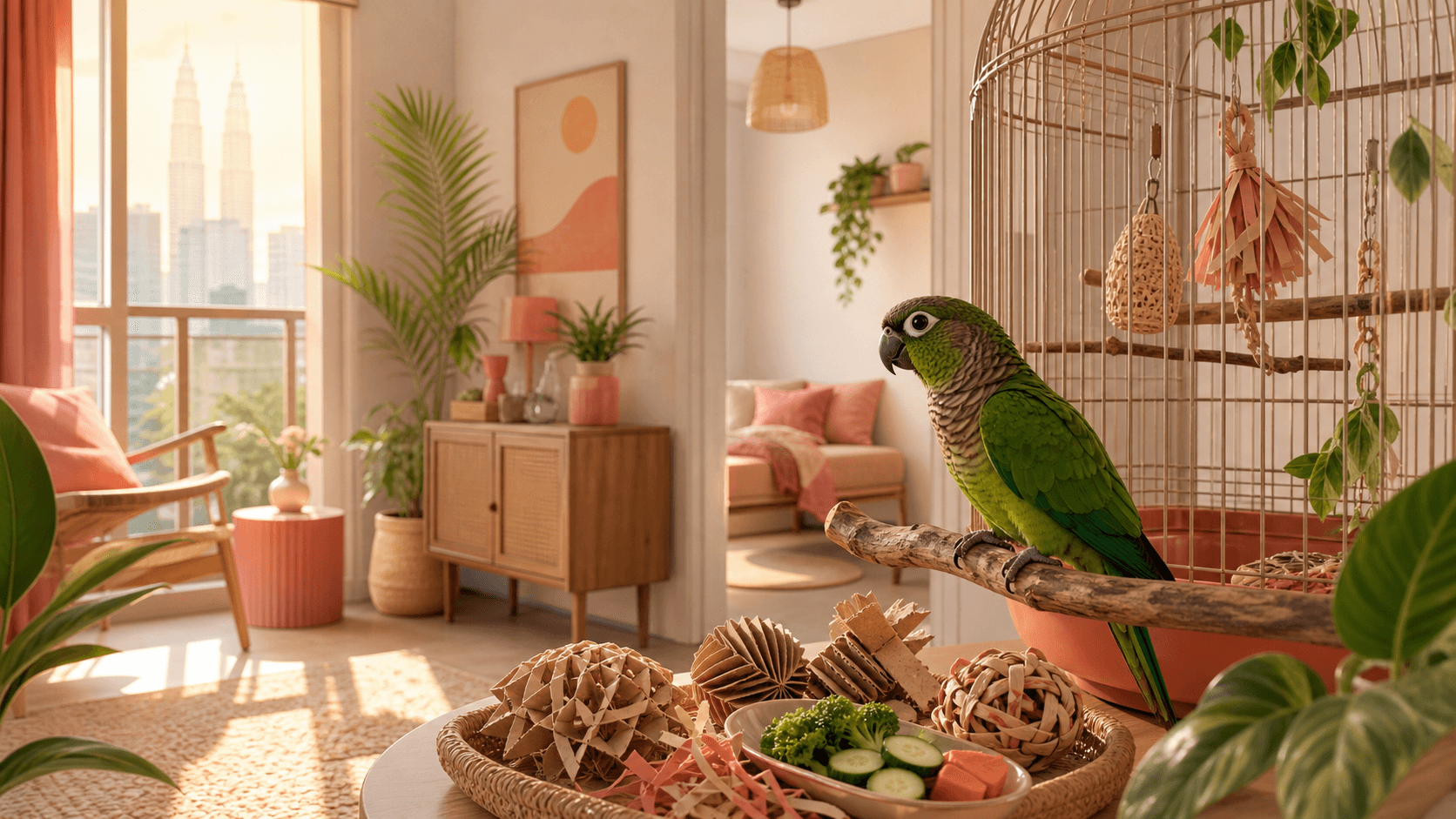
A parrot in an HDB flat, condo, or terrace apartment does not get to shout across a forest canopy. It gets a living room, neighbours, evening lights, kitchen smells, air-con, ceiling fans, and people who may only notice the bird when the volume climbs.
That does not mean the bird is being difficult. It means the day needs design.
Parrots normally vocalise around social contact, excitement, alarm, dawn, and dusk. A silent parrot is not the goal. A more predictable parrot is: one with planned noisy moments, proper sleep, safe chewing, and real food-search work before screaming becomes the easiest way to pull the whole household back into the room.
Build Noise Into The Day
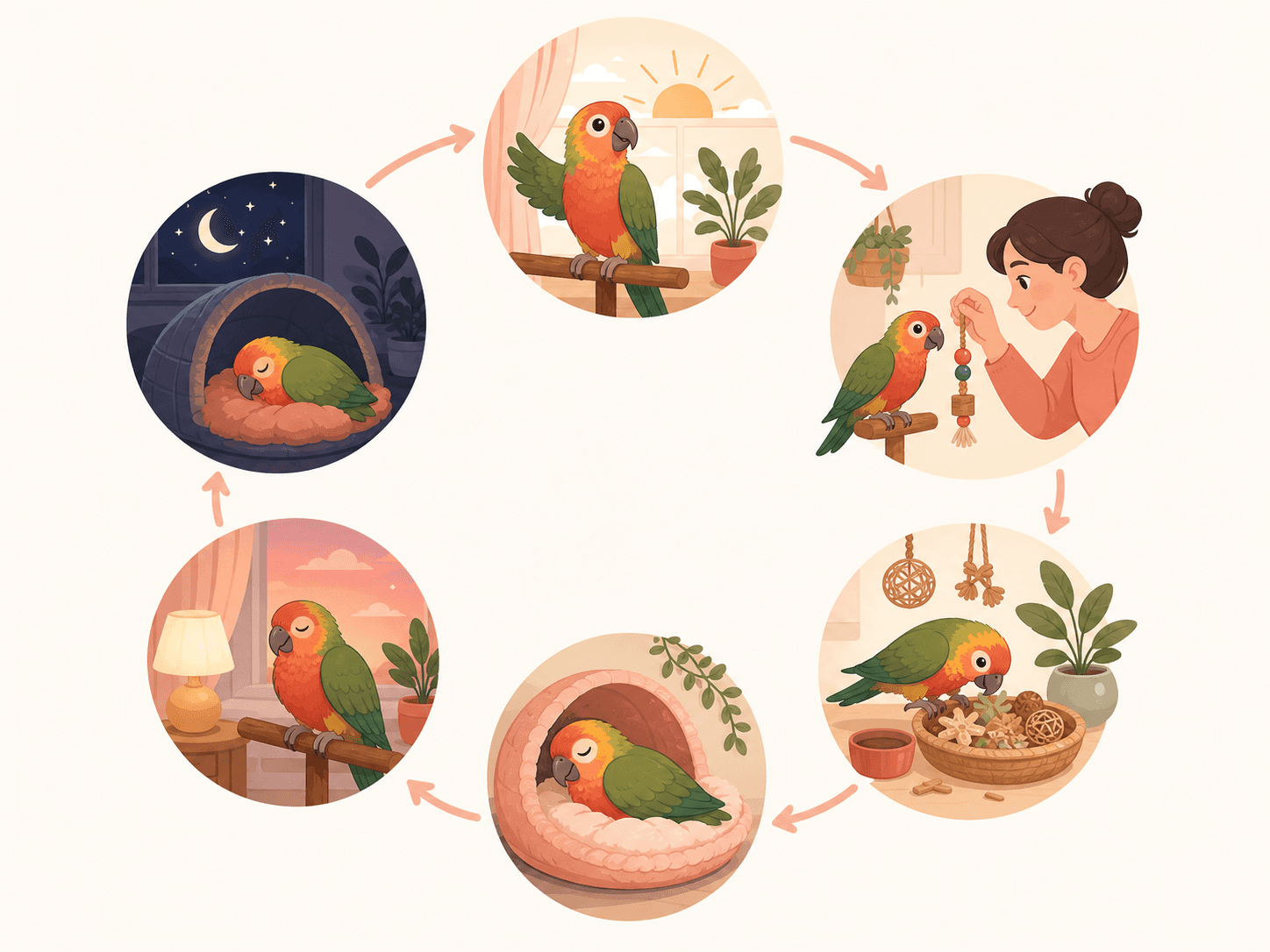
Start by accepting some noise instead of fighting all of it. Morning contact calls, dusk chatter, and excited flock noise are normal parrot behaviour. If every loud call gets a person rushing over, scolding, laughing, or negotiating from the kitchen, the bird may learn that volume works.
Plan attention before the difficult windows. A short morning check-in before work, a predictable after-school or after-office interaction, and a calm evening routine can help the bird settle into a rhythm. In apartments, this matters: lift-lobby echoes, corridor footsteps, renovation noise, and neighbours coming home can all set off alarm or contact calling.
Reward the quieter behaviours you actually want. Step over when the bird is calm, chewing safely, exploring a toy, or making softer sounds. Do not make screaming the most reliable doorbell in the house.
Protect Sleep Like It Counts
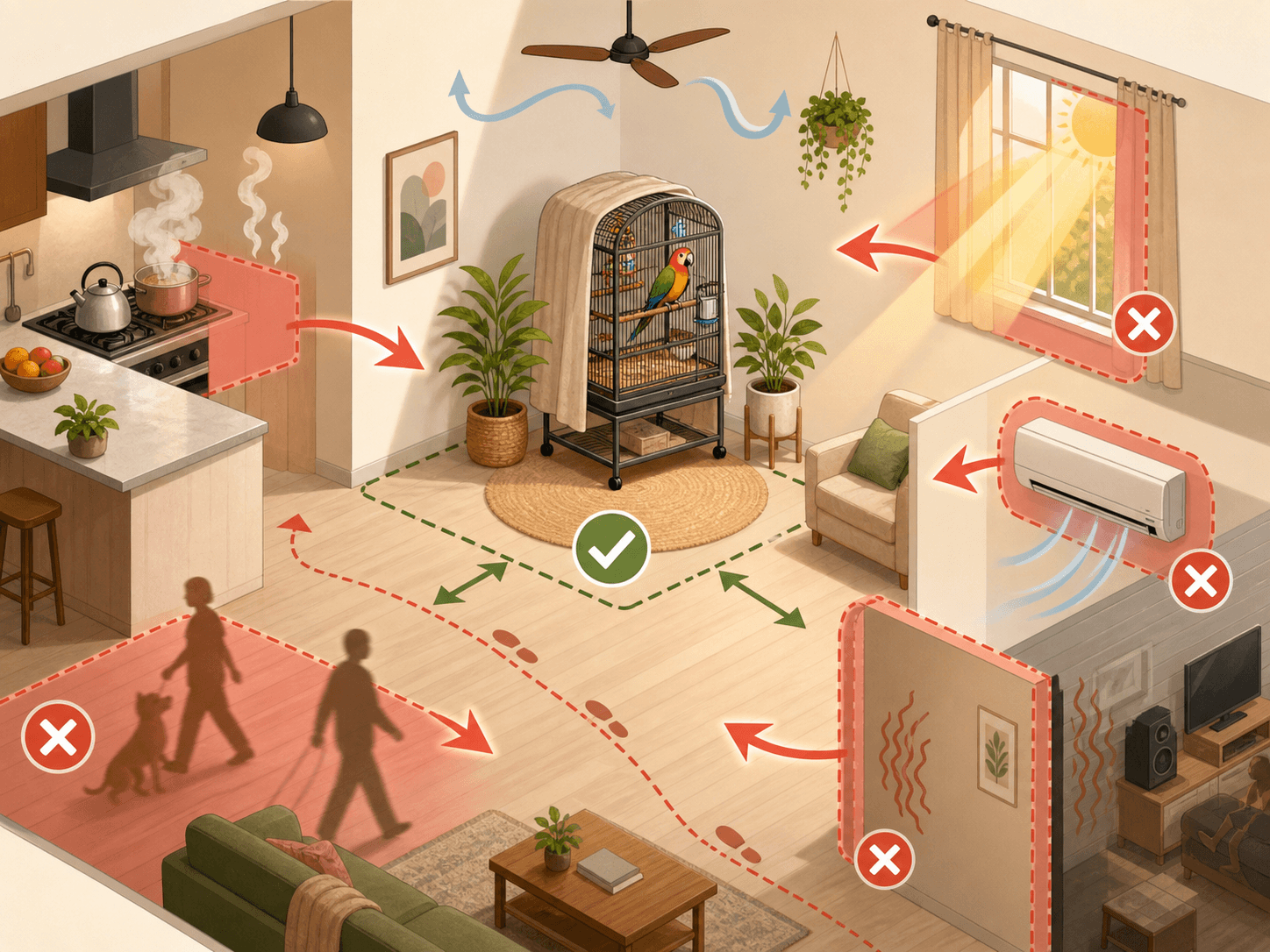
Avian veterinarians and bird behaviourists generally advise that most pet birds do best with between 10 and 12 hours of darkness a night, roughly matching the 12 hours of daylight and 12 hours of darkness of their natural day. Disrupted sleep may feed irritability, stress, or hormonally driven behaviour, especially in homes where the cage sits near the TV, dining table, gaming desk, or bright corridor window.
Choose the sleep spot carefully. Keep the cage away from kitchens, direct drafts, heavy household traffic, heat, and places that wreck sleep or neighbour peace. In tropical homes, also think about air-con transitions, afternoon heat through windows, and fans blowing directly at the cage.
That 10-to-12-hour dark window does not need to be dramatic. It needs to be consistent. If the household stays up late, consider whether the bird needs a separate sleep cage or a quieter room rather than living through every light switch, phone call, and supper run.
Make Food Take A Little Work
Wild parrots spend real effort searching for and processing food. Bowl-only feeding removes that work, then owners are surprised when the bird invents louder hobbies.
Put part of the normal diet into easy foraging toys, paper twists, shreddable holders, or puzzle feeders. Start simple. A bird that has never foraged should not be handed a complicated toy and left to figure it out hungry.
Supervise new toys first. Remove anything with inaccessible food, entrapment hazards, loose parts, sharp edges, damaged pieces, toxic metals, or fraying rope.
Food rewards still need guardrails. The MSD Veterinary Manual suggests a larger parrot's daily diet be built around 80% pellets, with 10–15% healthy vegetables and 5–10% fresh fruits, and seeds and nuts given only occasionally as treats or for training, because seeds are high in fat and should not make up most of the diet. So when you stash food in foraging toys, lean on that core diet rather than turning the whole game into a seed dispenser. Core diet and treat amounts must be species-appropriate, and can vary by life stage, body condition, and health status. Vulnerable birds or diet transitions should be discussed with an avian vet.
Humid kitchens add another boring but important detail: check stored pellets, seed mixes, and treats for dampness, mould, insects, and stale smells. Foraging should make food interesting, not risky.
Red Flags Are Not A Training Project
Sudden, severe, or escalating screaming, restlessness, feather damage, appetite change, droppings change, respiratory signs, or self-injury should not be treated as routine behaviour management. These need avian veterinary assessment.
Behaviour problems in parrots can have medical, environmental, social, nutritional, and learning-history causes. Poor sleep, unsafe housing, frustration, and owner response patterns can all shape what you see at home.
Use this guide to organise your observations, not to diagnose your bird at home. Your avian vet is the person who can examine your parrot and make an individual call.
Bring in a qualified behaviourist when the bird is medically checked, the home setup is safe, and the pattern still keeps repeating. That is especially useful when loud calling has become the most reliable way to get attention, or when the household routine keeps winding the bird up.
What To Track Before You Ask For Help
Keep the notes plain. You do not need a perfect behaviour diary; you need patterns your vet or behaviourist can use.
Record the time of day, what happened right before the calling or restlessness, who responded, what changed in the room, what the bird ate, how droppings looked, and whether sleep was disturbed. If there is feather damage, appetite change, droppings change, respiratory signs, or self-injury, book the avian vet appointment rather than waiting for the notes to become tidy.
One practical next step: choose tomorrow's two loudest windows, usually morning and evening, and plan contact, foraging, and sleep around those moments. Apartment parrots do not need a perfect home. They need a day that stops making screaming the obvious answer.
- Manja