
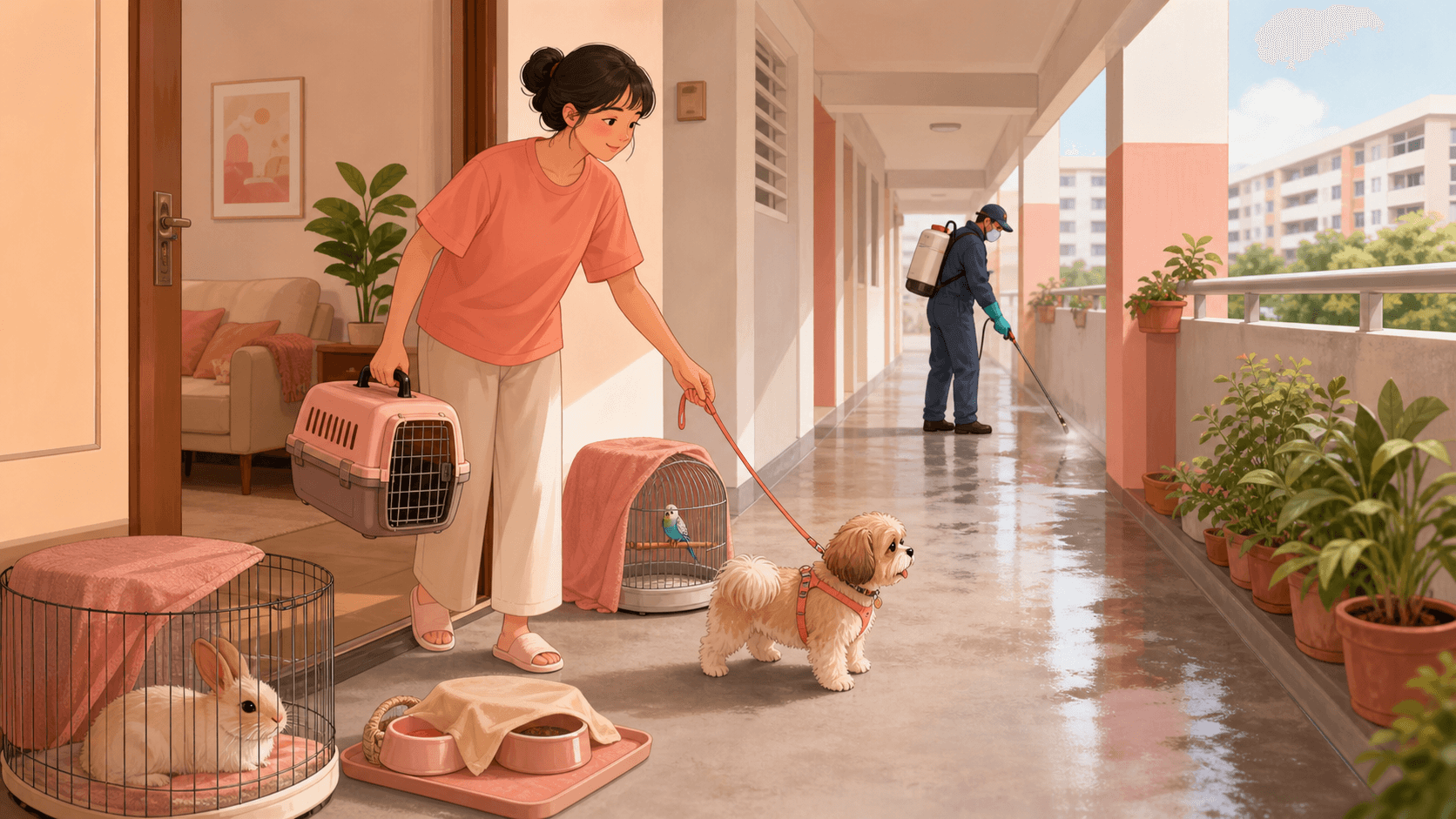
Fogging day is not the day to “see how”. Move pets first, protect their bowls and bedding, then let the label or notice decide when they return.
Manja is editorial, so use this to prepare for the vet conversation, not to diagnose your animal at home.
What changed (and why)
Older household advice often treated pest control as an outdoor problem. That misses the way dogs, cats, rabbits, and birds actually live with residue.
A dog walks through a treated corridor, then licks its paws. A cat steps onto a balcony, then grooms its coat. A rabbit noses hay that was placed on a floor. A bird breathes air from a room where aerosol or fogging drifted in. These are ordinary behaviours, which is why the safer routine is separation first, clean-up second.
The key rule is simple: pets stay out of treated areas until the pesticide label’s re-entry directions are met and sprays, baits, or surfaces are fully dry. The EPA says pesticide labels should be followed exactly, including keeping people and pets away during application and waiting until treated areas are safe to enter. NPIC gives the same practical direction for pets: keep animals away until products have dried or settled, as directed on the label.
In Singapore, estate mosquito control can include thermal fogging, misting, and insecticide spraying in residential areas. NEA notices, town council notices, condo circulars, and contractor signs matter because they tell you where the treatment is happening. Corridors, void decks, drains, gardens, balconies, and lift lobbies are all places to avoid during operations when they are listed or visibly treated.
Singapore’s warm, humid, rainy climate supports mosquito breeding, so dengue-period fogging may recur rather than happen once. The Meteorological Service Singapore describes Singapore as warm and humid year-round, and NEA links dengue prevention to mosquito breeding control. Build a detour plan, not a one-off scramble.
Move, cover, wash, replace
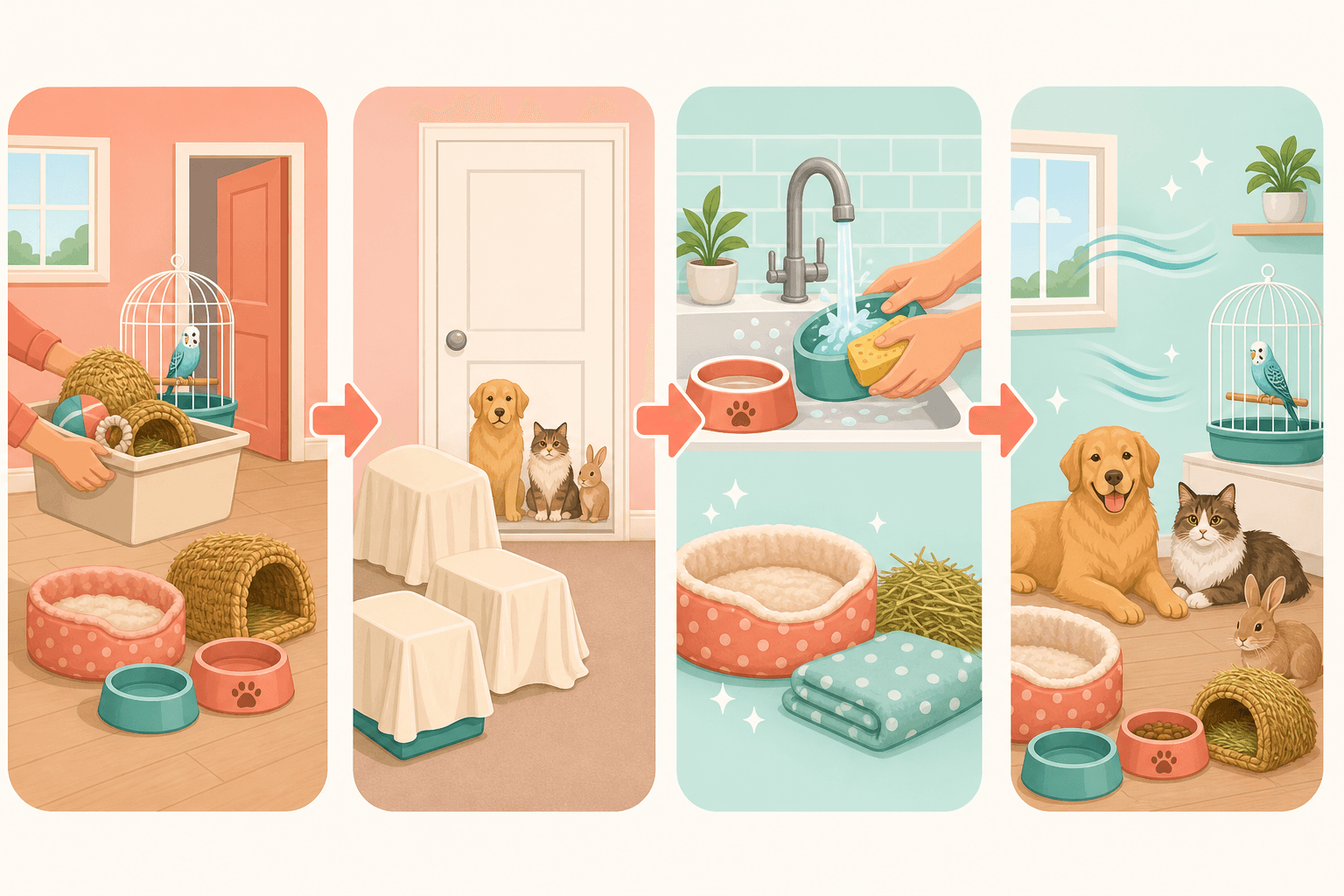
Before pest control starts, remove the things your pet eats from, drinks from, sleeps on, chews, or grooms near. If you cannot remove them, cover them fully and move the pet away from that room, balcony, corridor, or garden.
Food bowls, water bowls, litter trays, hay racks, bird cages, rabbit pens, bedding, and toys should be removed or covered before treatment. If residue may have settled on them, wash the hard items and replace the soft or absorbent ones where needed. NPIC specifically advises preventing pesticide contamination of pet food and water.
| Item | Before treatment | After treatment |
|---|---|---|
| Food and water bowls | Remove from the area | Wash before reuse if exposed |
| Litter trays | Move indoors or away from spray | Replace litter if residue may have settled |
| Hay racks and greens | Remove completely | Replace hay or greens if exposed |
| Bird cages | Move away from rooms, balconies, and windows | Return only when air is clear and area is safe |
| Bedding and toys | Bag or cover | Wash or replace if contamination is possible |
Do not put clean hay, greens, toys, or bowls onto a balcony floor or corridor that may still have residue. The surface matters as much as the item.
For common-area fogging, wipe dog and cat paws after necessary movement through nearby areas. Prevent scavenging too. AVMA warns that pets can be exposed by walking through treated areas, licking residue from fur or paws, or ingesting pesticide products, poisoned insects, or contaminated material.
Species risk is not the same
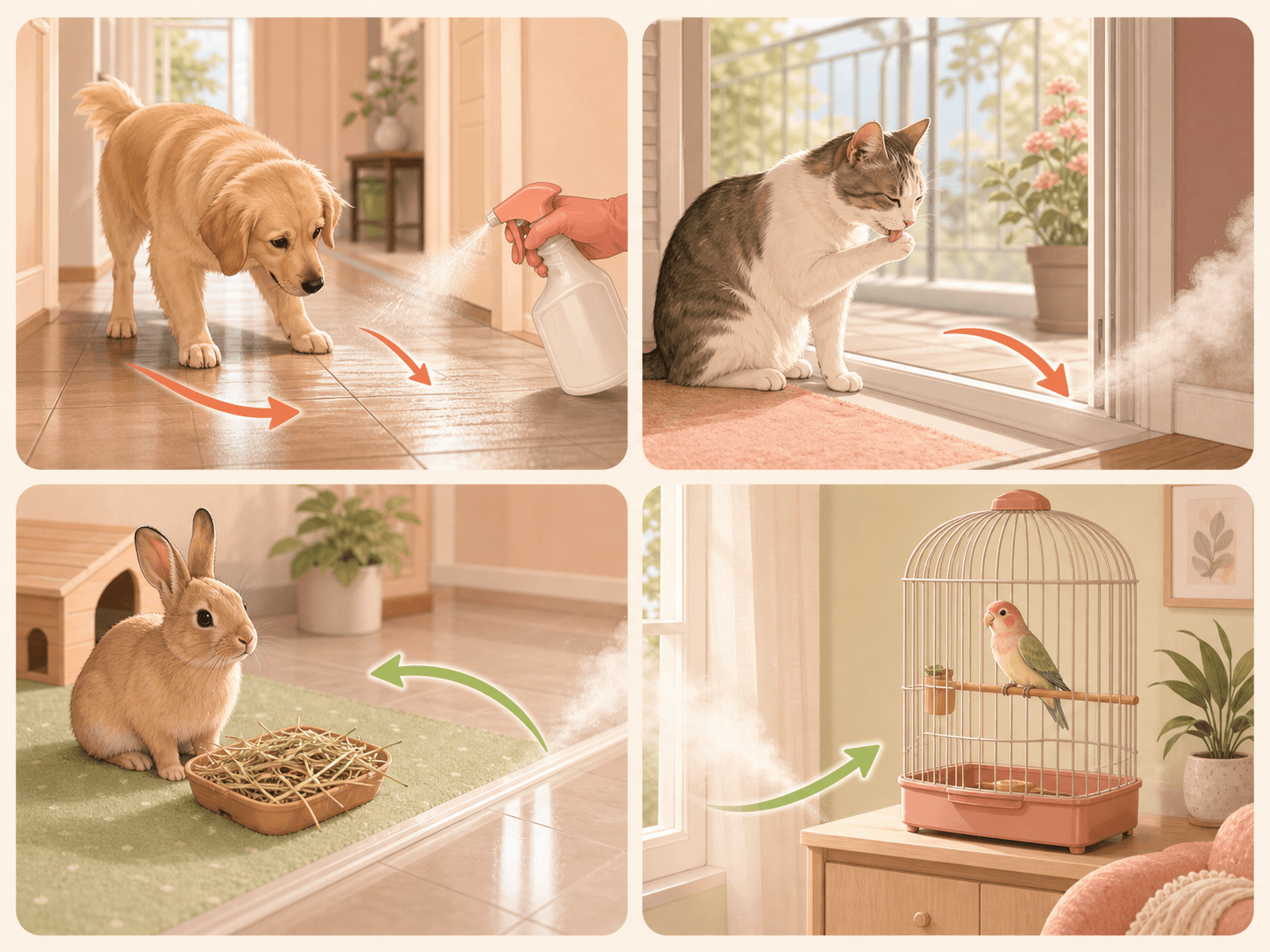
Dogs, cats, rabbits, and birds do not need the same level of caution for the same reason. The shared rule is separation. The reason differs by species.
| Pet | Main exposure route | Owner action |
|---|---|---|
| Dog | Paw contact, licking, scavenging insects or grass | Detour walks, wipe paws, prevent sniffing or eating debris |
| Cat | Grooming fur or paws; insecticide sensitivity | Keep indoors and away from treated balconies, corridors, and floors |
| Rabbit | Grooming, chewing, eating plant material | Keep off treated lawns, balconies, corridors, floors, hay, and greens |
| Bird | Breathing airborne fumes, sprays, aerosols, or fog | Remove from rooms or balconies before treatment and avoid strong odours |
Cats need stricter separation from many insecticides. International Cat Care warns that permethrin is extremely toxic to cats and exposure can cause severe neurological signs such as tremors and seizures. Do not assume a product used around dogs is safe near cats.
Rabbits need clean surfaces because they groom intensively and chew. They should not be allowed onto recently treated lawns, corridors, balconies, or floors. Keep hay and greens away from any surface that may have been treated.
Birds need air protection. Merck Veterinary Manual explains that birds have highly efficient respiratory systems and are vulnerable to inhaled irritants and toxins. The Association of Avian Veterinarians also advises protecting companion birds from fumes, aerosols, smoke, and other airborne household hazards. Move the cage before sprays, aerosols, fogging, fumigation, or strong odours are used.
Build a regional fogging routine
In Singapore, check NEA dengue cluster information, town council notices, condo circulars, and signs near lift lobbies or estate boards. If your usual dog-walk route passes drains, gardens, void decks, or treated corridors, choose a different route for that operation.
In Malaysia and Indonesia, dengue control can also involve fogging or space spraying around homes and neighbourhoods. WHO describes insecticide-based vector-control methods for mosquito control, with safety depending on correct procedures and exposure control. When streets are visibly fogged, move pets indoors, close cages or carriers away from windows, and avoid walking through the mist until it has cleared and surfaces are dry.
| Situation | Monitor | Call | Go now |
|---|---|---|---|
| Pet walked near a treated area but seems normal | Wipe paws, prevent grooming where possible, keep indoors | If you know the product name and are unsure about risk | If symptoms start |
| Bowl, hay, bedding, or toy may be exposed | Remove and wash or replace | If food or water may have been contaminated | If the pet ate exposed material |
| Pet shows drooling, vomiting, diarrhoea, tremors, weakness, breathing difficulty, seizures, or sudden behaviour change | Do not wait at home | Contact a veterinarian or poison-control service immediately | Bring the product name, notice, or photo of the label |
Pet Poison Helpline lists pesticide exposure signs including gastrointestinal, neurological, and respiratory symptoms, and recommends urgent veterinary advice. ASPCA Animal Poison Control also advises quick expert help when poisoning is suspected, with details of the substance involved.
Tonight’s small thing: take a photo of the pest-control notice, move bowls and bedding before treatment, and set one clean detour route for the next walk.
— Manja